







|
|
|
This page is the gateway to many complete articles which describe completed studies and research. They cover both pipe and electronic organs.
PREAMBLE
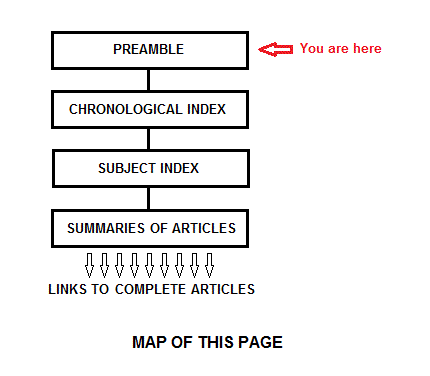
Finding an article can be confusing (I know this because some people have told me so!). With so much material on this site it is not always easy to find a way through it. So if you are new to the site, maybe take a moment to understand the layout of this page by looking at the page map below:
Currently you are reading the Preamble, as shown by the red arrow. This is followed by two index tables, each containing the titles of all the articles on the site but organised in different ways.
The first table is the "classic" chronological listing of articles in the order in which they were posted on the site. This is the original version of the list as used on this page since the site was founded. It is retained for those who prefer to continue using this format.
The second table is a newer subject index of articles where they are listed alphabetically by subject. This was added in 2008 in view of the large number of articles now available on the site.
Summaries of all the articles follow the indexes, and they complete the material on this page. When you click on an article title in either index, you come first of all to its summary to help you decide whether or not you want to read the whole thing.
Linking to the complete version of an article is then done by clicking on its title in the Summary section. This takes you a separate page on the site containing only that article. When you have linked to the article, you will find a button marked Up on its navigation bar. Clicking on this will return you to this gateway page.
Note on updating policy : most of the articles remain substantially as they were first written on the posting date specified. All articles were updated at the end of 2009, but this does not mean each one has been revised in its entirety. Thus statements such as "last year" in the text of an article are usually relative to the date it was first posted. Nor is there a guarantee that all external links referenced will still work today, though they are usually checked at the most recent update. Likewise, CD's, books and the like which are mentioned might not be available now.
This is the original version of the listing as used on this page since the site was founded. In each of the columns the most recently posted article is the first entry. By clicking on the title you will be taken to a summary of that article lower down this page, whence you can then access the full version if desired. The same titles but classified alphabetically in various subject areas are in another table below.
In this table the articles are classified by subject, and for practical reasons no distinction is made between pipe and electronic organs except where otherwise noted. Note that an article will often appear in more than one subject area. By clicking on the article's title you will be taken to a summary of that article lower down this page, whence you can then access the full version if desired. The same titles but listed chronologically (i.e. in the date order in which they were posted on the site) are in another table above.
Either browse the table just by scrolling down the page, or click on a subject area in the list below to skip directly to it:
Noel Bonavia-Hunt is known mainly for his work associated with the organ, but he was also active in many other fields including early radio and electronics, chess problems, musical composition, voice production, medicine and Latin verse. However only in the last was he professionally qualified. He practised as an amateur in the other fields having undertaken no recognised form of tuition or training relevant to any of them. Nevertheless this did not inhibit him publishing prolifically, and within each topic he thereby attracted an audience. However it was his bizarre activities as an unqualified practitioner of medicine which most starkly demonstrate his approach to his work. Blissfully unaware of his limitations, some of his stories are so implausible that one wonders whether he was more than merely eccentric, and one therefore cannot help questioning the reality of his accounts.
Against this can be set the fact that some of his work regarding the organ was undoubtedly valuable. His extensive research on diapasons, which dominated his entire life, is of considerable interest. However he seemed to think that this and similar activities related to the other classes of organ tone (strings, flutes and reeds) somehow made him an expert voicer, whereas he had bypassed the years of careful training which a genuine practitioner would have undergone. Although from the age of twenty he embraced the habit of revoicing just about every organ he came across, it is unclear whence he had derived the necessary skills, what those skills actually amounted to in reality, why an inexperienced amateur was given so free a hand, and why all these instruments needed this level of attention in the first place.
It therefore seems astonishing that Hunt was able to wield such influence for so long over highly qualified and experienced professional musicians and organ builders, together with their customers. It is equally remarkable that these professions submitted so meekly to his instructions and advice.
For reasons of length this article is partitioned into two sections. Part 1 (see below) deals with his life and times, and part 2 (this one) with his work and legacy.
Noel Bonavia-Hunt is known mainly for his work associated with the organ, but he was also active in many other fields including early radio and electronics, chess problems, musical composition, voice production, medicine and Latin verse. However only in the last was he professionally qualified. He practised as an amateur in the other fields having undertaken no recognised form of tuition or training relevant to any of them. Nevertheless this did not inhibit him publishing prolifically, and within each topic he thereby attracted an audience. However it was his bizarre activities as an unqualified practitioner of medicine which most starkly demonstrate his approach to his work. Blissfully unaware of his limitations, some of his stories are so implausible that one wonders whether he was more than merely eccentric, and one therefore cannot help questioning the reality of his accounts.
Against this can be set the fact that some of his work regarding the organ was undoubtedly valuable. His extensive research on diapasons, which dominated his entire life, is of considerable interest. However he seemed to think that this and similar activities related to the other classes of organ tone (strings, flutes and reeds) somehow made him an expert voicer, whereas he had bypassed the years of careful training which a genuine practitioner would have undergone. Although from the age of twenty he embraced the habit of revoicing just about every organ he came across, it is unclear whence he had derived the necessary skills, what those skills actually amounted to in reality, why an inexperienced amateur was given so free a hand, and why all these instruments needed this level of attention in the first place.
It therefore seems astonishing that Hunt was able to wield such influence for so long over highly qualified and experienced professional musicians and organ builders, together with their customers. It is equally remarkable that these professions submitted so meekly to his instructions and advice.
For reasons of length this article is partitioned into two sections. Part 1 (this one) deals with his life and times, and part 2 (see above) with his work and legacy.
Undulating stops are often found, even in the smallest organs where it might be thought that an ordinary rank would have provided better value for money. To add insult to injury, they are then frequently neglected so that they receive scant attention when it comes to routine maintenance, tuning and correcting deficiencies of pipe speech. Consequently the perspective of this article is that they deserve as much thought and attention as all the other stops in an organ, if only to defend their initial cost.
Several matters are discussed concerning the detuned ranks used in undulating stops, in particular those relating to how they are tuned. A topic which is frequently aired concerns whether they should be tuned sharp or flat to the unison stops, and an objective basis to support the apparently widespread preference for sharp tuning is presented. Another tuning issue relates to whether the beat frequency should be constant over the key compass or whether it should be varied, and if so, how. This is illustrated by explaining the Terzschwebung (third-beating) tuning method, frequently mentioned but not always understood, and its pros and cons are considered.
The material draws on the physics of music, but only a few necessary results rather than the details are presented. Mathematics is avoided entirely.
The article below (Part 1) discusses the acoustic effects of swell boxes on the sounds of the enclosed organ pipes, and this sequel now looks at the wide variety of mechanisms which have been used to operate the swell shutters. Since it would be impossible to include every known system, a broadly historical approach has been adopted to show how the main types of mechanism arose from the enabling technology which evolved across engineering more generally as time went on. Beginning with both unbalanced and balanced mechanical linkages between swell pedal and shutters, it is then shown how the need for remote control became pressing in the nineteenth century when pneumatic and electric actions made possible distantly-detached and sometimes mobile consoles. The influence of Robert Hope-Jones is discussed, who incorporated a novel electric servo mechanism in his first organ at St John's, Birkenhead, and who soon afterwards applied individual electropneumatic actions to each shutter in later instruments. To control the latter he introduced the multi-stage switch operated by the swell pedal which remains in use to this day.
Other techniques including the whiffle tree and Willis's 'infinite speed and gradation' system are discussed, and the article closes with some remarks about current and likely future trends in swell shutter control. However, despite the plethora of remote control techniques which have been tried, not all of them have enabled the immediacy and sensitivity of the continuously variable control offered by a well-engineered mechanical swell action to be achieved, and unfortunately this shortcoming remains far from unusual today.
The expressive capability of the organ can be enhanced by enclosing some of its pipes in a swell box with moveable shutters. However there is little or no literature describing how this affects the sounds in terms of acoustics, contrasting with the sometimes divergent opinions or desires expressed by organists which are widely aired. Therefore this article focuses on the sounds emitted by swell boxes in an attempt to better understand their behaviour. It is the first of two, with the second (see above) exploring the diverse mechanisms that have been used to operate the shutters since the swell box was first introduced over three centuries ago.
This article charts the history of the keyboard from ancient Greece to modern times. It explains how the seven-note Pythagorean scale was developed from only three purely-tuned intervals - the fourth, fifth and octave - using a number system strongly imbued with religious mysticism, and how these notes still exist as the white notes of today's keyboard. For centuries the same notes were associated with the ecclesiastical modes of plainsong until they were augmented in medieval times by five additional black ones. These also remain unchanged today in the familiar alternating groups of two black notes followed by three, and together the white and black notes formed a fully chromatic octave of twelve semitones. Firstly in medieval Europe, this subdivided octave enabled musicians to explore the concept of 'key' as well as 'mode' together with the system which led to Western harmony built on the basis of 12 major and 12 minor triads with their major and minor thirds. Along with the many different keys came the ability to modulate from one to another, hitherto unknown. The expanded keyboard was backwards-compatible in that it still enabled the old modes to be played on the white notes only, together with the new set of 24 keys using both the white and black notes. The story is remarkable in that it hinges so strongly on the Greeks' mystical notions of numerology. It is therefore arguable that we might not have the music we enjoy today, nor the keyboard which often generates it, without the religious notions of the ancient Greeks and their gods. It is also remarkable that beautiful keyboards virtually identical to those of today were in use in Europe well before 1500.
Without using mathematics, this article describes the physics of the venerable 'free' (as opposed to 'beating') reed used for millennia in many forms of wind instrument. It shows that the reed is an acoustic negative resistance oscillator, oscillation being maintained by an impulse at mid-cycle arising from forces due to static blowing pressure, the Bernoulli effect and the inertia both of the vibrating tongue and air flow. The reed tongue then moves freely each side of the impulsing region to oscillate virtually sinusoidally with a high Q-factor. Thus oscillation is practically isochronous, frequency being virtually independent of amplitude (loudness) and hence blowing pressure. Periodic air pulses are emitted from the time-varying windway of the tongue as it oscillates, the pulse shapes defining the harmonic content of the waveform and thus the timbre of the sound. Pulse shapes vary with blowing pressure.
The free reed can couple strongly to adjacent resonant cavities. Therefore, notwithstanding its frequency stability, its pitch can be 'bent' by harmonica players because of the cavities formed by the player's vocal tract and their cupped hands. In the case of organ pipes using free reeds it is shown that the 'boot' acts as a Helmholtz resonator with the reed assembly forming the tuned port. If the boot is too small it can result in 'pulling' when tuning the pipe, explaining why the boot of free reed organ pipes has to be made unusually large.
Reed tuning and voicing matters are discussed, including some differences between beating and free reeds. The shallot aperture of a beating reed is important in that its shape, and hence the acoustic spectrum generated by the reed, is varied widely by pipe organ builders. Therefore the lack of anything comparable for a free reed considerably limits its voicing flexibility. However the sensitivity of free reeds to adjacent resonators such as organ pipes, mentioned above, is discussed by relating it to the appearance of pipe organ stops in the nineteenth century using free reeds with an apparently attractive range of tone colours.
This article is a sequel to an earlier one (see the 'Helpers and Haskells' summary below) which described, probably for the first time, the physics of Haskell pipes without recourse to mathematics. Some predictions were also made about certain features which might be seen in the acoustic spectra of Haskell pipes before they had actually been observed. Consequently the work described here was undertaken to investigate these predictions experimentally. In particular it was suggested in the earlier work that a Haskell pipe would exhibit a strong second harmonic, and this has now been confirmed. It is shown here that the SPL of the second harmonic increased by at least 10 dB relative to the fundamental when a Gamba pipe was Haskelled, consequently this supports the theory of operation of the Haskell pipe put forward in the earlier article. It is also shown how the fundamental frequency of a Haskell pipe can be predicted easily to better than 2% of its measured value.
Although the acoustic spectra of an extensive range of ordinary organ pipes have now been published and discussed widely for nearly a century, none relate to Haskell pipes as far as is known. The differences between Haskelled and non-Haskelled spectra presented here are therefore believed to be unique in the public domain literature. In this article they are related to criticisms of the 'Haskelled sound' which have long been articulated within the organ building community.
A stopped (closed) organ pipe speaks an octave below the pitch of an open one
of the same length, but since the even-numbered harmonics are suppressed or
absent its timbre or tone quality is unsatisfactory for some purposes.
This article discusses two alternative methods for deriving suboctave tones from half length pipes while retaining all the even and
odd harmonics. In the first, a separate open 'helper' pipe provides the even harmonics,
sounding together with a stopped pipe which supplies mainly the odds.
Owing to the use of two separate pipes the technique offers considerable voicing
flexibility to the extent that it can be impossible to detect that the system is in use.
It
is illustrated in terms of the harmonic spectra of both constituent pipes.
S S Wesley's eccentric views on temperament are nevertheless valuable because they show unequivocally that mean tone tuning was used in Britain before equal temperament became the norm around 1860. This follows from his frequent mention of Wolf intervals, and only the mean tone temperaments have Wolves. However the consequential question as to which of the several mean tone tunings he had in mind is not so easy to answer. Hence this article discusses the quarter, fifth and sixth comma temperaments as candidates without calling on physics or mathematics. It simplifies the situation by removing fifth comma mean tone from consideration since it is indistinguishable in practice from sixth comma tuning, thereby reducing the choice to only the quarter and sixth comma temperaments.
Elsewhere it is claimed that several early English organs were tuned in fifth comma, though since this was based on measurements whose accuracies could not have distinguished reliably between fifth and sixth comma data, we can reasonably say that these instruments could just as easily have been tuned to sixth comma. Practical reasons supporting this view include the fact that sixth comma tuning has the least objectionable Wolf (demonstrated here by audio recordings), and it can also be tuned very easily by one familiar with equal temperament (and vice versa). This is because the beat rates of the two temperaments are related by a factor of exactly two. This would have been important at a time when mean tone tuning was being displaced by equal temperament - tuners could not have been oblivious to the fact that their lives would be simpler if they only had to learn a single tuning method which would suit two very different temperaments in common use.
Finally, since Wesley approved of Gottfried Silbermann's work and mentions his (sixth comma) temperament frequently in his writings, it is concluded that the 'unequal temperament' he referred to was most likely sixth comma rather than fifth or quarter comma mean tone. Thus the balance of probabilities suggests that unequally tempered organs were tuned to this temperament in the first half of the 19th century before equal temperament became near-universal in Britain.
An introduction to theatre organ playing, written mainly for the traditional organist who just wants to know a little more about these fascinating instruments. The article includes a case study comprising a detailed analysis of the registrations used in a popular piece for which the sheet music is readily available online, together with an audio recording. Some wider issues of playing style are also discussed.
Describes a virtual theatre pipe organ using samples from the 1935 three manual six rank Rutt organ in the St Albans organ museum, formerly in the Regal cinema at Highams Park, north-east of London. Audio recordings are included.
Describes a virtual theatre pipe organ using samples from the 1933 three manual ten rank WurliTzer in the St Albans organ museum, formerly in the Empire cinema at Edmonton, north London. Audio recordings are included.
The young J S Bach was appointed organist at what is now known as the Bachkirche in Arnstadt in 1703, leading to today's familiarity coexisting with persistent misunderstandings about the instrument. For more than three centuries writers have revealed uncertainties over such basic matters as its stop list, leading some to propose dispositions which could not
even have fitted on the jambs of the still-extant console. Thus more subtle matters such as how music might have been registered on it have not been well addressed. At one extreme it can be argued that the tonal design of the instrument defies logic compared with contemporary
Werkprinzip organs to the north, and to counter this it is necessary to examine the rapid changes in musical taste and registrational styles taking place post-1700.
It is not difficult to identify features in the waveforms and spectra of individual organ pipes consistent with subjective assessments of how they sound, but it is more challenging to explain how the many pipes comprising a complete organ stop sound as they do. The problem is important because individual pipes do not make music as generally understood since organ music is a dynamic aural tapestry woven in real time across the entire rank. Therefore the issue looms large when comparing stops whose pipes are similar yet which sound distinctly different to the ear when music is played on them. The example considered in this article is of this kind, in which two Principal stops from different 'schools' of organ building are studied. One was made by Gottfried Silbermann in Germany in the 1740s and the other by Brindley and Foster in England in the 1900s, and the article includes recordings of traditional organ music made using them to illustrate the point.
The articles for DIY enthusiasts on this site relating to virtual pipe organs attract a lot of interest, so here is another. (They also attract a lot of interest from the trade as well!). It describes a unit which inserts a short delay between switching on the mains supply to a digital organ and connecting the loudspeakers to the amplifiers. This prevents the unpleasant noises which occur otherwise, and it also prevents damage to the loudspeakers themselves. It also disconnects the speakers before removing the power to the amplifiers when switching the organ off. An attractive feature is the push button switch plate used at the console, which has the look and feel of a typical pipe organ starter. When a lot of effort has been put into a digital simulation these small additional features can make all the difference to the satisfaction the instrument provides.
Naturally-occurring audio frequency artefacts caused by lightning such as 'whistlers' have been studied extensively in science, and they have also found a niche in contemporary music of both serious and popular genres. However the lower frequency manifestations of lightning such as Schumann resonances of the earth-ionosphere waveguide have attracted less attention from musicians, and the still lower frequencies involved in disturbances originating in the earth's magnetosphere have been largely ignored. This is understandable since most of these phenomena go deep into the infrasound region, thus they cannot be heard directly when converted into sound. Consequently this article investigates alternative possibilities for creating music inspired by Schumann resonances and by ultra low frequency waves below 1 Hz. Aspects of the signals relevant to music are highlighted, revealing some noteworthy coincidences. For instance, the lowest Schumann resonance near 8 Hz coincides with that of an organ pipe speaking 64 foot C, and the inharmonic partials of Schumann waves are closely analogous to those of church bells. The two therefore sound similar when the Schumann frequencies are translated into the audio region.
Raising the wind in pipe organs by human muscle power was universal until the industrial revolution got underway, though the subject has not been extensively studied. Yet by the mid-nineteenth century, at least two millennia of development had resulted in highly evolved bellows systems which were capable of providing stable and copious wind to the largest instruments such as Schulze's monumental organ at Doncaster. However there remains a problem today in that the physics of organ blowing is not apparently tackled anywhere in the public domain literature. Consequently one struggles to find answers to quite basic questions such as the wind pressures and volumetric air flow rates which human blowers could achieve, and the time for which they could maintain the effort. The upshot is that it is easy to overlook useful information which some of the most apparently bizarre and fanciful images of organ blowers at work can reveal until we have looked at the physics of the humble bellows. Similarly, the physics can enable some of the ancient texts relating to organs to be interpreted more intelligently. Another example relates to claims that some instruments built in the nineteenth century used wind pressures exceeding 20 inches (508 mm) of water raised by manpower alone, which might seem extraordinary given that most church organs made do with about 3 inches. Yet without understanding the physics of bellows it is impossible to verify such assertions. These and similar uncertainties obviously assume importance in the context of organ historiography, which looks at codified history to judge whether it is sensible, but resolving them is not an entirely trivial undertaking. Therefore this article attempts to augment the story of organ blowing by outlining the physics which governs how bellows and their blowers were perforce constrained to operate in times past.
Most writers on musical temperament concentrate almost exclusively on the theoretical background to the subject, indeed the numerology becomes an end in itself in many cases, so consequently the interests of the practical musician are not well served by much of the literature. This article takes a different approach by completely ignoring the mathematics and physics in favour of two straightforward but important musical aspects from which others then follow. For 11 unequal temperaments the variations in key flavour are emphasised, together with a clear indication of whether any keys are unusable. This is done by a simple tabular representation showing at a glance how the 24 major and minor keys of each temperament fall into categories labelled 'good', 'reasonable', 'poor' and 'awful'. From the tables it is also sometimes possible to discern the hand of the temperament designer, showing that some were undoubtedly better than others. Werckmeister and Neidhardt were particularly good at it in that they succeeded in distributing the major and minor keys reasonably evenly across the spectrum of key flavours, whereas some others were less successful. It is singular that the latter usually failed to achieve enough variation within the minor keys compared with the major ones. The tables also identify two temperaments in which the worst keys comprise the largest category, which is scarcely a recommendation to use them! Kirnberger seemed to be one of the less competent sources in these respects. The tabular format also confirms how temperaments evolved from the early and rather unsubtle meantones, through a progression of later ones with no Wolf intervals and more useable keys, to those incorporating distinct echoes of equal temperament yet which retain a pleasing range of key flavours.
In 2016 I posted an article on this site about the keyboard temperament which is popularly associated with
Handel. In the article I presented a mildly unequal temperament, one which enables all keys to sound well-intonated while retaining some variation in key flavour across the keys, which matched the tuning instructions reasonably well. Since then some further work has been done, leading to the development of more precise criteria which can be used to assess how well any temperament corresponds to the vague tuning instructions. In particular it was found possible to rank temperaments objectively against each other using a numerical scoring system. In this way a further mildly unequal temperament emerged, different in detail to that described in the earlier web article. The characteristics of the new temperament turned out to be surprisingly well defined in view of the haziness of the tuning instructions, to which it corresponds in every particular.
A consistently popular article on this site gives constructional details for a simple organ console. However it only describes the console shell rather than the furniture which it hosts such as keyboards, pedal boards, key contacts, pistons, stop controls and swell pedals. Therefore this article fills the gap by bringing together a collection of hints and tips relating to these items gleaned from my experiences in making a number of consoles. The emphasis is on ways to keep costs down without compromising too much on quality, and not at all on reliability, since purchasing new items is extremely expensive and not cost-effective for many people compared with the other approaches discussed here. Many of the suggestions in the article have survived the test of time over many years.
Digital organs and virtual pipe organs can be disappointing in many ways, but some of the problems can be addressed through the use of audio equalisation (EQ) techniques. For example, the loudspeakers used are often ill-suited to the sounds being radiated in that the original voicing and regulation of an instrument will have been undertaken using entirely different ones. This is particularly true of virtual pipe organs because the same, arbitrary, audio system of fixed characteristics is expected to produce optimum results with any number of sample sets originating from any number of suppliers. This can lead to problems including thin or boomy bass reproduction or excessive brightness in the treble register. Or an organist with age-related hearing loss might find the instrument unsatisfactory towards the top end of the compass, particularly with the higher-pitched stops. Or the use of external effects processors such as reverberation units can introduce spectrum distortions which are immediately identifiable as artificial. Audio equalisation can address all of these and similar problems. Thus a range of equalisation techniques is discussed, including the use of passive or active tone controls and graphic equalisers. All are easy to apply to an existing instrument, and they can be remarkably cost-effective in relation to the benefits which result.
Joseph Gabler's remarkable organ of 1750 at Weingarten Abbey incorporated a Vox Humana stop considered so lifelike that its origins quickly became rooted in legend. It remains celebrated today, thus prompting this article. Its pipes were found to have a high frequency formant ascending from 1.8 kHz to 4.4 kHz over the note range analysed (tenor C# to top A nearly three octaves higher). Hence the formant frequencies vary by a factor of only 2.4 for a note frequency ratio of 6.4, following a logarithmic law across this range. Thus the similarities to the 'singer's formant' present in the voice of a trained adult male singer were striking. This occupies a band around 2 - 3 kHz and, as with the Vox Humana, its frequency is relatively static compared with the tessitura of the singer. The formants of both the Vox Humana and singers also lie within the frequency band in which the ear is most sensitive, endowing them with similar penetrating abilities.
It is further shown how the formant arises from the fractional-length resonating tubes used across the rank, and how its frequency for a given pipe can be deliberately selected by promoting a coincidence between a specific harmonic of the vibrating reed and a specific natural resonance of the tube. Thus it is likely that Gabler had learnt how to precisely select and maximise the loudness of his chosen formant for each pipe through careful tuning of the tube relative to the reed just by using his ears. The Q-factors of some formant resonances were surprisingly high, resulting in SPL enhancements of several tens of decibels relative to the local mean levels in the spectra. It is a tribute to Gabler's obvious skill and an exquisitely keen ear that he was able to achieve this outcome. His Vox Humana at Weingarten does indeed have characteristics objectively similar to those of the human singing voice, even though it seems to have taken nearly 270 years to prove it.
These results are comparable with those from a previous analysis of the Vox Humana rank on a Wurlitzer theatre organ from the 1930s, also discussed in the article. This too is a striking example of the genre, and it makes one wonder whether and how the insights of master organ builders of the baroque era such as Gabler might have been handed down in some way through the craft to their successors some two centuries later.
The literature on musical temperament is replete with descriptions of keys which are said to be 'intolerable' and therefore 'unusable', and presumably such statements are intended to apply to all keyboard instruments. However this generalisation benefits from closer scrutiny, because not all instruments are the same where temperament is concerned. In particular, the many timbres or tone colours of the organ enable the key flavours of an unequal temperament to sound significantly different depending on which stops are used. This article uses audio examples to show that the differences can be remarkable, such as the case where even the notorious Wolf interval in quarter-comma meantone tuning becomes quite docile and usable when suitable stops are selected. These effects are unique to the organ because no other instrument has its wide range of tone colours and combinatorial possibilities.
It is shown why this interaction between temperament and timbre occurs by explaining firstly how key flavour is influenced by the beats of tempered consonant intervals, and then how the beats arise from specific pairs of harmonics in the notes defining each interval. It is then easier to see why different stops can affect key flavour, because timbre as well as the beat patterns are both strongly affected by the numbers and strengths of the harmonics in the sounds.
A consequential phenomenon is also discussed in which the subjective flavour of triads and other chords depends on how the composer constructed the harmony of a piece. In particular, the inversions in which the chords appear and whether they are written in close or open positions can result in marked changes in key flavour. This also is demonstrated with audio examples and explained as before in terms of beats and harmonics.
When unequal temperaments were more common than they are today, one can probably assume that composers would have deliberately wandered in and out of the less agreeable keys to add interest to their music. Moreover, it would not be surprising if they assumed that organists with sufficient familiarity would have learnt how to amplify or attenuate those effects by choosing their registration appropriately. Indeed, it would be more surprising if they did not, given that they would have come across the effects as part of their everyday experience. Perhaps most importantly, the article shows that keys which are routinely dismissed as 'intolerable' in the literature on temperament are not necessarily so on the organ, which has the ability to soften their effects because of the range of different timbres available.
Despite its apparent simplicity, details of how the organ flue pipe works have fascinated musicians, organ builders and scientists for centuries and it still continues to attract attention today. One reason for this is that the actual mechanisms are extremely complex, to the extent that they still lie somewhat beyond the reach of physics. This also applies to the techniques used in voicing the pipes, and it is this aspect on which this article focuses. However the rationale of the article is not so much to describe what a voicer does, which has been covered by others, but to shed light on the physical principles involved. This does not seem to have been attempted before, at least not without resorting to advanced mathematics. However maths makes no appearance here because the article is intended for the general reader, and in any case there still exists an unfortunate gulf between theory and experiment relating to organ pipes. Nine of the most important adjustments available to the flue pipe voicer are discussed in detail, including the somewhat mysterious technique of 'nicking' often applied to the languid and lower lip. The attack transient of a flue pipe is also covered. In each case the discussion draws out the physics involved as well as the consequential aural effects such as changes to timbre and power. Comprehensive cross-references to other articles elsewhere on the site are provided, and these can be accessed immediately using the links provided.
This article describes a digital simulation of the large and beautiful Rushworth & Dreaper organ of 1927 at Great Malvern Priory, England, though it is unusual in that the sound samples were recorded over forty years ago. At that time there was no thought of using them to recreate the sound of the organ because the necessary technology was not widely available, and instead they have been used in various studies of the physics of organ pipes. However the advent of the virtual pipe organ in more recent times means that the sample set can now be used to simulate the instrument as it sounded then (1979), which is significant because the organ has been rebuilt subsequently with consequential changes in its aural character. The simulation therefore retains the aural flavour and playing experience of an untouched English romantic instrument, Edwardian in concept, whose sounds have been lost to some extent. Some sound files are included.
A major problem in synthesising musical sounds lies in assigning values to the large number of parameters associated with each note. For example, in additive synthesis the relative amplitudes of each harmonic have to be specified together with the way each one varies throughout the sounding epoch. Or in a physical model of an organ flue pipe the parameter set describing the aerodynamics of the pipe foot and mouth, as well as the properties of the resonant air column, likewise becomes inconveniently large. In such cases allocating values to the parameters to achieve a desired timbre is therefore a major challenge. The problem is particularly difficult for the organ because each stop is in effect a different instrument with a distinct character. Furthermore each stop also comprises many separate notes which all have to be individually voiced. This results in a serious parameter overload and estimation problem in current synthesis techniques for simulating the pipe organ.
This non-mathematical article shows that the surroundings of an organ pipe react so strongly on it that a flue pipe would not work at all if the adjacent atmosphere did not respond as it does, and reed pipes would sound completely different. Thus a pipe is not an isolated entity which operates independently of the environment it is in. The pipe-atmosphere interface is also responsible for its end corrections, and furthermore it influences radiating efficiency as a function of frequency. This affects the proportion of a pipe's sound energy contained in its early harmonics compared with the high ones, which strongly influences its subjective timbre or tone
colour.
Digital organs
are well known for their tendency to fatigue the ear when played loudly with many stops drawn. This commonly happens even in instruments which sound well
with quieter combinations. The phenomenon is partly due to intermodulation distortion arising mainly in the loudspeakers which causes very large numbers of spurious sum and difference tones to be added to the sound. It is quite possible for there to be hundreds of thousands of distortion products, and although each is of low
amplitude their sheer number causes an audible background of acoustic mush to arise in the radiated sound. As a result the sound loses transparency and it becomes wearisome and identifiably electronic. Pipe organs do not suffer from this defect at all.
Sampled sound synthesis is used widely in digital organs and universally in virtual pipe organs. Usually the samples are recordings of actual organ pipes, and therefore manufacturers frequently claim that their products sound indistinguishable from the real thing. However this article shows that this is questionable for at least one reason - double ambience. This reflects the fact that the recordings are made in one room whereas the instruments are played in another. It is well known that room ambience imposes often gross distortions on the frequency spectrum of an organ pipe, and the distortion varies dramatically over distances of a few centimetres. Therefore when the ambiences of two rooms effectively in series are involved, the already-distorted waveforms in the memory of a digital organ will be distorted in a different way for a second time when the instrument is played. Aural examples of the effects of single and double ambience on reed and diapason tones are presented to illustrate the problem. Double ambience is in fact a wholly artificial listening environment which never arose in human experience until the advent of broadcast audio and recorded sound. Consequently it would unsurprising if our brains have not evolved with the ability to fully process sounds which come to us via two stages of ambience. If so, then maybe this is one reason why some people find sampled-sound digital synthesis inherently unsatisfactory and why they can readily identify digital organs as those which do not use pipes.
Discusses some sources of distortion encountered when listening to music. It considers distortion introduced by electronic items such as amplifiers and computer audio systems, as well as acoustic elements including loudspeakers, headphones and the ear itself. Audio test files are included which demonstrate intermodulation distortion in particular, and they also give some idea of the relative contributions of the distortion due to your listening system and your ears. They can also be used for identifying and troubleshooting a listening system which seems to have a poor distortion performance. The material might be of interest to those play digital organs as well as to those who listen to recorded music.
This article discusses
the tendency of some modern authors to reflect today's norms of fashion, musical culture and understanding of physics into their writings about early temperaments, when these matters were in fact very different several centuries ago. A prime example concerns the difficulty of tuning intervals accurately until relatively recently when electronic tuning devices appeared in the late twentieth century. Until then tuners of keyboard instruments had to time beats using various less precise methods, and even this only became routine from about 1800. Prior to that tuning was done for centuries using the vaguest of instructions which appear
ludicrous to modern eyes. The reasons for this are that beats and the harmonics which generate them were for long imperfectly understood, and practical means for timing them accurately did not exist. The plethora of different pitch standards made things worse because beat frequencies depend on absolute frequency. There were also problems due to the slow dissemination of temperament theory, together with widespread educational narrowness which meant that most musicians and tuners would not have understood it anyway. In addition, hand blowing and poorly-designed winding systems meant that the tuning stability of organs was badly controlled regardless of how tuners might have struggled to set a temperament accurately. The upshot of all these factors is that the sharp focus applied to subjects such as key colour today can be anachronistic if it is assumed that our predecessors several centuries ago viewed them as we do. Obviously, the key colours of a temperament become elusive if it cannot be set up accurately in the first place on an instrument with stable tuning, and for centuries this would have been the case with the organ.
In about 1780 a description was published in London of what has become known as 'Handel's Tuning' or 'Handel's Temperament' Although the association with Handel has little foundation, this article suggests that it is worth revisiting the temperament attributed to him for several other reasons. One is the unfortunate fact that many modern realisations of it are wrong because they are incompatible with the complete set of tuning instructions given. These illuminate tuning practices at a time when beat counting was uncommon and, while therefore vague on detail, they nevertheless incorporate an explicit set of overarching constraints which place definite bounds on the possible outcomes. In particular, all fifths must be flat rather than pure or sharpened, and all thirds must be considerably sharp. It is therefore regrettable that the modern realisations of this temperament which are embodied in electronic tuning devices are mostly wrong because they incorporate pure fifths. It is also impossible to conclude, as some authors have done, that the temperament was just another variation on the meantone tunings which were common at that time in Britain. On the contrary, it is difficult to see how the temperament can be other than a mildly unequal one. Consequently it probably lies on the haphazard path which ultimately led to equal temperament in the nineteenth century rather than being merely another example of an already-outmoded meantone approach, although the temperament is not equal because the tuning instructions also dictate that the fifths should differ in their deviations from pure.
The frustratingly unfocused tuning instructions nevertheless allow for several subtle variations in realising a version of the temperament, and therefore I took advantage of this to produce my own which is described in the article. It addresses the tuning instructions at a level of detail not found elsewhere, providing a reading which I therefore believe to be novel. The outcome is a pleasing well temperament with a range of subtle key colours which can render music in any key. Because of the imprecision of the tuning instructions it is not possible to interpret them in a single, unequivocal fashion - the best that can be done is to come up with one of several possible variations on the theme of 'mildly unequal'. That described here is represented as a set of deviations from equal temperament for each note in the scale, a format which is well suited to most of today's electronic tuning devices and apps, thus it should be reasonably simple to evaluate in practice.
Discusses a patent on the physical modelling synthesis of organ flue pipe sounds assigned to Viscount International SpA. It is confined solely to the patent specification rather than speculating on technical aspects of Viscount products, which might differ. The modelling concept described in the patent departs from that usually discussed in the literature in that there is no coupling or feedback between the sound generating and resonating elements of the simulated pipe. Moreover, the generator model described in the patent does not correspond to the type of nonlinear oscillator normally assumed when modelling flue pipes and similar wind instruments. Instead it models the acoustic excitation signal applied to the resonator rather than modelling the oscillator itself for reasons which are described in the patent. On the other hand, the resonator is modelled according to generally accepted physical modelling principles relating to waveguide synthesis of flue pipes, and this makes the system unique to Viscount as far as digital organs are concerned. The model is rich in terms of the number of parameters which can be adjusted to achieve the sound desired. Virtually everything which can be adjusted seems to be software-adjustable, leading to a potentially wide range of voicing options. The article is offered to expand some technical aspects of an innovative and novel approach to digital music synthesis, and to make them more accessible to a wider and less specialist audience than that targeted by the patent itself.
When simulating musical instruments using synthetic waveform samples it is necessary to adjust or 'scale' the samples across the key compass to imitate the variations in timbre or tone quality which occur in the real acoustic instruments. In the pipe organ, each pipe comprising a stop is scaled (dimensioned) deliberately to encourage its timbre and loudness to remain subjectively of a piece across the rank. For example, cylindrical pipes of diapason (principal) tone quality are often scaled so that their diameters halve at the interval of a major tenth, in contrast to their speaking lengths which perforce must halve every octave.
This article shows how scaling laws affect the harmonic spectra of the pipes by representing each spectrum as two trendlines. Only three numbers are required to define the trendlines, namely their point of intersection and their slopes, which is considerably fewer than attempting to specify a spectrum using the amplitudes of its constituent harmonics. An additional reason for using a trendline approximation to represent a spectrum, rather than using the harmonics themselves, is that no two pipes of any organ stop sound exactly the same in terms of their timbres. Moreover, the tone colour of any one pipe varies significantly at different points in the building owing to standing wave effects. This intrinsic variability enables trendlines to capture the essentials of spectra which are subject to these perturbations, because the lines themselves are not influenced as strongly as are the individual harmonics by random variations - the lines tend to 'iron out' the scatter among the harmonics.
Variations in each of the three trendline parameters for a real diapason stop across the key compass are presented and explained in terms of its scaling. The results suggest how to scale the spectra of a synthetic sample set upwards towards the treble and downwards towards the bass to represent a complete and consistently-scaled diapason rank, and it is shown how wave samples can be derived from the trendline parameters for use in a sound sampler. It is also shown how the data can be used to generate similar sample sets for a chorus of diapason stops at different pitches which are properly scaled in relation to the unison rank, just as in a pipe organ.
The method is general and it can therefore be applied when simulating the other classes of organ tone (flutes, strings and reeds) as well as other musical instruments.
This article shows how the effects of organ pipe scaling laws can be related objectively rather than subjectively to changes in their tone quality across a rank. This fills a gap in organ building practice and in the literature, where little exists which quantifies the choice of pipe scale on the tonal effects of an organ stop. The tone quality of a pipe is reflected in its frequency spectrum, but there are three major difficulties in using the spectrum directly. Firstly the amplitudes of the harmonics exhibit gross scatter which varies unpredictably from pipe to pipe. Secondly the harmonic pattern of an individual pipe is not invariant but depends on listening position within the building, because the perturbing effects of standing waves on each harmonic are unique to a particular location. Thirdly a spectrum contains many harmonics, therefore attempting to define it using their amplitudes is unmanageable.
These problems were solved by approximating to the pattern of harmonic amplitudes using linear trendlines. Only two lines are required to represent most, if not all, organ pipe spectra. Thus only three parameters are required to define a spectrum, namely the point of intersection of the two lines and their slopes. Trendlines are less strongly affected by the factors which perturb the individual harmonic amplitudes because the factors are more or less random, therefore the lines tend to 'iron them out'. Consequently the three trendline parameters form a robust data triplet for approximating to the pattern of harmonics in a spectrum.
It is shown how the trendline parameters vary across the key compass for a diapason organ stop whose pipe diameters followed a Töpfer-type progression in which they halved at every sixteenth pipe. The parameters were estimated from spectra derived from recordings of the pipes in situ in a building, and variations of the three parameters across the keyboard were compatible with those expected from this scaling law. For instance, the level of the second harmonic increased systematically towards the bass and decreased towards the treble. This behaviour reflected the variation in pipe diameter whereby the bass pipes were narrower (relative to their speaking length) compared with those higher in the compass. Thus it was possible to observe the operation of the scaling progression quantitatively in terms of its effects on tone quality across the compass, perhaps for the first time.
When simulating musical instruments it is often necessary to adjust the tone colour or timbre of existing sound samples, or to produce entirely new ones. Conventionally, this requires the creation of new harmonic spectra to represent the new tone colour, and the modified samples are then generated using additive synthesis. However, creating the desired spectra is time consuming and laborious especially when they comprise many harmonics, and it also requires a lot of skill and experience. So some means is desirable to reduce the labour involved, and the technique of Trendline Synthesis described in this article offers this advantage. It enables a wide range of prototype spectra to be created instantaneously by specifying no more than four parameters for each one, regardless of how many harmonics they might contain. Thus manual intervention is minimal, making the design cycle for a new synthetic sample set much faster, cheaper and more flexible than creating it from recordings of existing instruments or constructing a set of new spectra harmonic by harmonic. Audio recordings are included, showing that Trendline Synthesis can produce convincing aural examples of the four classes of pipe organ tone colour - diapasons (or principals), strings, flutes and reeds. These advantages ensue from the simple means by which a spectral envelope is approximated by a set of trendlines, and for organ pipe spectra it has been found that only two lines are necessary. Because only two parameters are required to define a straight line, it follows that no more than four are needed to define both trendlines in any spectrum and thus the spectrum itself. A novel computer design tool is described which facilitates the process.
This article shows that the four classes of organ pipe tone - flutes, diapasons (or principals), strings and reeds - have frequency spectra characterised by significant amplitude scatter which often obscures their systematic structure. It is therefore remarkable that our ears have little difficulty in deciding that the sounds from a given rank of pipes belong to the same stop on an organ. However groupings of harmonics have been identified in the spectra analysed over some forty years of research, and each can be associated with a linear trendline fitted to the harmonics of its group. Using additive synthesis it has been found that the subjective tone quality of a pipe is little changed when it is reconstructed from its trendline values rather than from its actual harmonic amplitudes. In any case, such differences as do exist between the actual sound of a pipe and its reconstruction are often eclipsed by those occurring naturally between adjacent pipes owing to the gross variations in their spectra. In most cases only two trendlines are required in each spectrum.
This finding might be significant in aural perception because it is a means of reducing the confusing welter of data in real spectra to a much simpler generic form which nonetheless retains the essentials of the sound of an organ pipe which satisfies the ear. Because the ear and brain process both amplitude and frequency logarithmically, the trendlines themselves on a similar log-log spectrum plot take the simplest possible form, namely straight lines rather than curves. This being so, each trendline is defined using only two parameters - its slope and its intercept on the amplitude axis. Thus a spectrum with an arbitrary number of harmonics can be reduced to just four numbers which nevertheless seem to encode its essential subjective features. This represents a considerable dimensionality reduction in a spectrum with many harmonics which has implications for acoustic pattern recognition, whether implemented by brains or machines.
It is well-established that brains extract linear features when processing visual sensory inputs, and it is therefore possible that similar neural mechanisms might operate when processing the auditory sensory data arriving from the inner ear. An amplitude-frequency spectrum is merely a 'picture' which must be projected within the auditory cortex in some way, and it is conceivable that linear features within it - such as the trendlines discussed here - are extracted as part of the acoustic pattern recognition processes in the brain. There would seem to be implications for the mechanisms of musical perception in these suggestions.
Perhaps surprisingly, there still seems to be quite a lot of interest in the analogue technology used in old electronic organs and synthesisers, judging by the number of requests I receive for information. Articles already on this site include the following:
Tone Filters for Electronic Organs (a 450 kB PDF download describing how to design the filter networks for instruments using subtractive synthesis. First published in Wireless World in 1980)
How Synthesisers Work (outlines both analogue and digital synth technology at an introductory level)
Winston Kock and the Baldwin Organ (an outline of the work of Dr Winston E Kock who designed the world's first commercially successful subtractive synthesis organ)
Choosing an Electronic Organ (an article first published in Musical Times in the 1980s)
This new post is not so much an article as a book, being a substantial 150-page compendium providing enough information to enable a high quality subtractive synthesis instrument to be constructed, as well as surveying best practice in the wider analogue scene as it was in its heyday. Both frequency divider and free phase oscillator systems are considered and described in detail. While most of the low-end commercial products of that era were undeniably awful, a few firms such as Allen, Rodgers and Copeman Hart produced custom instruments which were well regarded at the time, and some of the principles and techniques described are similar to those which they used. It was distributed originally as a spiral-bound hard copy book for the Electronic Organ Constructors' Society in the UK in 2001, and it is now made freely available here in PDF form in view of the evident continuing interest in the subject. Clicking on the link above will initiate the download (approx 1.5 MB).
This article concerns the famous organ built by Robert Hope-Jones at Ocean Grove, New Jersey, USA in 1908 and in particular a lecture and demonstration he gave there a couple of years later. That event was auspicious because it took place shortly after he had consigned his future to the Wurlitzer company, and it was also to be only four years before he took his life. Thus the lecture was a swan song marking his entry into the poignant twilight days of his career. The article also points out the contrast between the Ocean Grove lecture and one Hope-Jones had given nineteen years earlier to the College of Organists in London. At that time he had built only a single organ in St John's church at Birkenhead near Liverpool, England, and even that was just a rebuild of an older instrument. Yet so compelling was its demonstration of a new electrical control system for organs that it instantly became his stepping stone to fame. Thus the two lectures mark the rise and fall of his work as an organ builder who changed the face of the craft, globally and permanently, over little more than two decades.
It is fortunate that transcripts of both lectures still exist. By comparing them we can see how his ideas were fully developed on paper at an early stage, how they became realised in practice as the enabling technology around him unfolded and progressed, and how his personality changed for the worse in response to the pressures he encountered during his career. His first instrument at Birkenhead contained all of the action, switching and circuit techniques which were immediately taken up and applied in electric actions worldwide. They appeared in a fully developed form in the Ocean Grove organ, which could not have existed without them. They were not displaced until electronics began to appear in organ building in the 1970s, well over half a century later, and even today organs are still built or rebuilt with electromechanical actions and components which are functionally identical to those invented by Hope-Jones.
The article explores these threads, demonstrating that his engineering achievements remain a positive and objective measure of his legacy which cannot be disputed even by his severest critic.
This article surveys the main types of electromagnets and solenoids used in organs with an electric action. Emphasis is placed on a range of fundamental design issues including magnetomotive force and the ampère-turns product, the magnet core and the magnetic circuit. These are illustrated with reference to three types of magnet used widely in organ building - lever magnets, those with hinged or floating armatures and solenoids. Operating characteristics are also presented which show how the force exerted by these magnets varies with the position of the armature during its stroke. These data are not widely available elsewhere, most manufacturers merely quoting a single force figure if it is quoted at all. Considering that the force of some magnets can vary as the cube of armature position, this approach is plainly unsatisfactory.
Discusses reversible piston mechanisms by showing that they all require a memory which holds the reverse of the current position (on or off) of the controlled stop. This stored information then reverses the position of the stop when the reverser piston is pressed. It is also shown that the complete system, comprising the controlled stop plus its internal mechanism, is a bistable device which is similar in terms of its logical design to the countless millions of bistables which make up today's electronic computers. Therefore in this sense the familiar reversible piston of the pipe organ which we take for granted predated the computer by at least a century.
In the earliest mechanical reversers the internal memory element was a wooden 'poppet', and the way this worked is described. Poppets continued to be used in pneumatic and electropneumatic reversers until well into the twentieth century, when they were displaced by fully electric systems using electromechanical relays. Several varieties of all these types of mechanism are described in detail. The article concludes by examining entirely electronic reverser systems having no moving parts and in which the internal memory is realised by a transistor bistable circuit akin to those used in computers.
Shows how mixtures are constructed in terms of the number of ranks, the starting composition in the bass and how it ends up in the treble, and the various patterns of breaks in between. All mixtures must converge to a similar composition at the top of the compass simply because it is pointless trying to make pipes smaller than a reasonable practical limit. Therefore differences between mixtures can only be accomplished by varying their starting composition in terms of its pitches and number of ranks. The task of the designer is then to implement a scheme of breaks designed to reach the ultimate composition in the treble while enabling the mixture to perform its functions across the compass. These include brightening the bass and augmenting the other chorus stops elsewhere.
Quint mixtures, those containing only octave and fifth-sounding ranks, are discussed in detail. 'Full' and 'sharp' mixtures are described and contrasted and their functions explained. The inevitable tuning problems of mixtures are illustrated which result from including the perfectly-tuned intervals in a mixture within the tempered environment of the other stops.
Tierce mixtures, including Cornets, are described which contain a rank speaking the fifth harmonic. It is shown that their tuning problems are major and insurmountable unless one is content with a mixture in which most major thirds are grossly dissonant across the entire compass in organs tuned to Equal Temperament and some others. 'Harmonics' mixtures, those which contain the seventh harmonic in addition, are also discussed though their artistic rationale could not be discerned.
The article concludes with other topics including pipe scales and the problems caused by deriving mixtures by extension.
This article addresses the problem of deciding which virtual pipe organ (VPO) to go for out of those currently available. It describes what a VPO is, and then deals with a wide range of technical and playing issues which affect the choice. A number of VPOs available at the time of writing (2014) are briefly discussed. The article contains links to many others on this website which augment the detail associated with the points raised.
This short article describes how to remove the engraved characters from old organ stop tabs so they can be re-used on another organ console, such as that for a virtual pipe organ. The method can result in a considerable cost saving in view of the expense of buying new items, because even blank tabs are expensive today, let alone engraved ones. As an example, recovering just 40 old tabs in the manner described can save you in the region of GBP 200, and they will look as good as new. Proper stop tabs look and feel far better than touch screens, and a simple way of setting up the stop names for a particular simulation is also mentioned which does not involve the inflexibility and expense of re-engraving.
This article describes a hard wired approach to electric action circuit design which is more economical in terms of component count than alternatives such as conventional diode keying. Like the latter, it employs switching at two points in each magnet circuit - at the keys and at the coupler gates - but its implementation at a detailed level is significantly different. Instead of using very large numbers of electronic coupler switches each realised using discrete transistors, diodes and resistors, this approach uses miniature telecoms relays for coupling. Keying is then done electronically using a single transistor in each key circuit, regardless of how large the organ might be and how many couplers and unit chests it might employ. Thus the number of transistors in any system always equals the number of keys on the instrument using this method - just one transistor per key. For this reason the approach is called TinyTran to denote a transmission using a smaller number of transistor switches than conventional systems.
By using plug-in relays of the type suggested, maintenance in the field should be greatly simplified. At the same time the compelling advantages of maintainability, graceful failure and resistance to obsolescence exhibited by diode keying are retained. However, because the system uses far fewer components than conventional diode keying, particularly regarding the number of transistor switches required, it should be cheaper because of lower component and assembly costs. It should also exhibit enhanced reliability and survivability for the same reasons.
This article shows how fully electronic organ actions can be assembled from basic components including diodes and transistors using the technique known colloquially as 'diode keying'. A coupler switch is described in terms of a diode AND gate, and it is also explained how an electromagnet can be driven using a transistor. Using only these two types of generic circuit module, it is demonstrated that a wide range of actions can be constructed to suit any organ with any mix of intra- and inter-divisional couplers.
Achieving isolation between various circuits is a necessary feature in any type of organ action if unwanted notes are not to sound, and it is shown how diodes are well suited to this role. They also enable the use of a single contact per key which only has to switch a small current regardless of the size and complexity of the organ. Thus only one wiring harness from each keyboard is necessary to connect the console to the organ itself.
It is pointed out that, given a systematic approach, identifying and replacing faulty components in a diode keying system is no more difficult than it was in the days of electromechanical actions. This is not necessarily the case with other types of electronic transmission. For such reasons diode keying sits well with the conservative technology and dignified longevity expected of a pipe organ, and it is for this reason that the article was written in the hope that it might assist those who wish to understand more about how it works.
This article describes how the electromechanical keying systems used in pipe organs since the time of Robert Hope-Jones in the 1890s were wired. There are still many such instruments around otherwise it would not be possible to obtain the action components today, therefore it is anticipated the article will address the needs of those who wish to maintain, repair or simply understand them. It is also the intention that the article might have some historical value. Circuits applicable to intra- and inter-divisional couplers are described, as well as those appropriate to organs using slider and unit chests. The extension principle is explained at the circuit level, together with some particular issues related to the fully unified organ such as the need for key relays. It is pointed out that well-designed electromechanical actions usually fail gracefully rather than catastrophically, they are readily maintainable, and they are more robust than their electronic counterparts against eventualities such as lightning damage.
This article illustrates some aspects of audio signals, related to their phase, that do not seem to be universally known. Firstly it demonstrates that the organ pipe waveforms we can view on an oscilloscope screen or in a wave editor are the result of adding all the harmonics together, taking account not only of the amplitude of each harmonic but its phase as well. However, because the ear is insensitive to phase, it is only the harmonic amplitudes which are important to our perception of timbre or tone quality while the pipe sounds in its sustained or steady-state speaking regime. Therefore the phases can be adjusted at will without modifying tone colour. This can be useful if a waveform has a high crest (peak) factor which results in the available signal headroom in a digital synthesiser being used inefficiently. Such waveforms suffer from subjective loudness and signal to noise ratio limitations which might be less than optimum. Therefore it is shown that the crest factor can be reduced by adjusting the relative phases of the harmonics. Visual and aural examples are provided.
It is also pointed out that spectrum analysis can be applied to audio signals using Fourier transforms which are only half the size of those used traditionally, because the phase information present in the source waveform can be discarded. This results in useful improvements in both memory size and execution speed in some digital music applications.
Cavaillé-Coll built organs of all sizes, and I have already simulated one of his small Model 9 instruments which was installed at Bellahouston Parish Church in Glasgow (now lost). However it was a baby organ with no independent pedal stops, so I have now extended it to a substantial two manual instrument with 30 speaking stops. Loosely based on that formerly at Paisley Abbey (also lost), it includes the batteries of powerful reeds and mixtures which characterised his larger instruments together with his beautiful colour reeds such as the Voix Humaine, Basson-Hautbois and Clarinette. This article describes the instrument in detail.
This article was written to satisfy requests for information about the transportable console built for the Prog Organ virtual pipe organ. It describes a simple, lightweight, low cost keydesk which can be dismantled readily and stored as a collection of flat panels when not in use.
Physical modelling is the latest technique for the digital simulation of musical instruments generally, and it is also found in a minority of digital organs and organ synthesisers. However there is almost no literature available to assist the non-specialist in coming to grips with what is involved, its strengths and its limitations. As the underlying concepts are far from new, this article will describe how an organ flue pipe can be modelled using physical principles which became well-established three decades or more ago. Models of the oscillatory mechanism of the air jet at the pipe mouth, the resonating action of the pipe body and how the sound from the pipe emerges to form a sound wave in the surrounding atmosphere itself are all described. Thus the article presents a complete picture as its title indicates but without recourse to mathematics or complicated physics. This makes it unique in both respects - completeness, and its accessibility to a broad readership.
The overarching problem of physical modelling lies in its necessary reliance on the approximations which are identified in this article. Some of the processes involved in pipe speech are imperfectly understood, or they involve intractable mathematics which is not well suited to real time synthesis on small computers. Even if this were not so, all problems in aerodynamics are fundamentally insoluble at a detailed, rigorous level because the underlying Navier-Stokes equations cannot be solved either. The situation does not signify a total impasse by any means, but it implies that physical modelling is a better synthesis technique in some cases than in others. For instance, the simulation of every pipe in a specific organ is probably best realised using sampled sound synthesis, because this gets round the approximation problem simply by recording the actual pipe sounds directly. It is difficult to argue that the sounds of real pipes can be improved by any form of modelling, so when the samples are subsequently replayed by the performer one has a more or less exact reproduction of the sounds of the original instrument. However there are inflexibilities inseparable from any sample set, such as that related to the fixed microphone position at which the samples were recorded. These inflexibilities do not apply as strongly to physical modelling because the range of parameters which can be adjusted in a good model allow spatial effects, for example, to be modified at will. Thus the simulated listening position can be adjusted within wide limits. On the other hand, the approximate nature of physical modelling means that it cannot approach the sound of a particular pipe at a particular listening position as closely as does sampled sound synthesis. Thus the issue boils down to the alternative between simulating particular pipes exactly by sampling their sounds, or simulating a wider range of pipes approximately using physical modelling. Both techniques have their place, and ultimately the choice between them must lie with the customer. Therefore it is hoped this article might illuminate the issues which need to be considered regarding physical modelling.
It is well known that organ pipes have an 'end correction' which makes them sound flatter in pitch than simple theory suggests based on their physical length. Organ builders have developed a good empirical understanding of this effect over many centuries so they can make pipes of the correct length, but a satisfactory theoretical treatment still remains elusive. This is partly because one also has to understand the natural resonant frequencies possessed by an organ pipe - these are quite separate both in theory and practice from the harmonics heard in the sound it emits. Each natural frequency has its own end correction which is different from all the others, and this makes the natural frequencies mutually anharmonic. This differs from the forced harmonics in the sound of the pipe when it speaks because their frequencies are exact integer multiples of the fundamental frequency. Because the interaction between the natural frequencies and the harmonics materially affects the timbre or tone quality of the pipe, it follows that the physical mechanisms of the end correction underlie not merely the tuning of a pipe but its subjective aural effects as well.
This article presents the results of research which demonstrates many aspects of a complex matter. However it largely avoids mathematics, and it also describes a novel experimental technique which reveals the natural frequencies of a pipe. The results are related to the work of other authors, not all of which is confirmed. Particular aspects of accepted wisdom not confirmed by the results here include a nonlinear dependence of end correction on frequency (some previous work suggests it is linear). It is also shown that the natural frequencies are not necessarily "nearly" harmonically related as often assumed.
Results such as these are important to refining the physical models of sound generation in organ pipes which are used in some synthesisers and digital instruments. It is suggested that a reasonable goal for such models would be for them to predict accurately the natural frequency spectrum of a pipe of given dimensions, and this should include such details as the Q-factor of each resonance as well as its frequency and amplitude. It is not clear that all physical models used in digital music have yet reached this level of sophistication.
The church of St Mary Ponsbourne in Newgate Street village near St Albans in Hertfordshire contains an authentic and historic English organ built in the mid-Victorian era by the well known firm of J W Walker in 1858. This article describes how its sound was captured digitally for posterity on a virtual pipe organ (Prog Organ), just prior to a major overhaul in 2013. Some audio examples of the result are included.
This article considers the problem of generating a complete sample set for a digital sound sampler, comprising an independent and different sample for each note, from sparse or incomplete data. The common technique of stretching a sample across a range of notes (keygroup) was not used because this results in an identical timbre or tone quality for each note of the keygroup. Moreover, that timbre then changes abruptly from one keygroup to the next. These deficiencies sound artificial and unsatisfactory. Instead, the approach here uses each raw sample directly in the sampler, and in addition reference spectra are also derived from them. Interpolation from the reference spectra is then performed to create a unique harmonic spectrum for each of the 'missing' samples, which are then generated using additive synthesis. The problem of restoring the necessary realism to the synthesised sounds is illustrated by describing in detail how an attack transient can be analysed and then incorporated in a sample as it is synthesised.
The article emphasises the need for special purpose software tools, not only to implement some stages of a rather complex process in the first place, but to realise them in a time-efficient manner. These tools are deliberately written as stripped-down command line applications which are suitable for batch-processing the hundreds or thousands of samples needed for a high quality digital organ. Examples of the operations carried out include automatic harmonic identification, interpolation, additive synthesis, calculation of loop points and some aspects of transient generation.
These techniques enable a complete sample set to be built from a sparse one using features of both sampling and additive synthesis - the real samples can be used directly in a sound sampler, and they are also analysed to enable the remaining samples to be generated by interpolation followed by additive synthesis. Thus all samples in the complete set are based directly on real pipe sounds, which they would not be if they were derived using an approach such as physical modelling.
The widely-available sparse sample set of the Stiehr-Mockers organ at Romanswiller in France by Joseph Basquin is used to illustrate the points made in the article. The 265 original samples in this set were expanded to 923, of which 133 had attack transients.
This article discusses the Hafler-Gerzon loudspeaker arrangement in the context of digital organs or virtual pipe organs. The Hafler-Gerzon system was invented in the 1970's and it derives an additional loudspeaker channel from an ordinary stereo pair in a simple manner without requiring additional power amplifiers. The additional channel is the difference between the two original signals, and by applying the difference signal to a separate loudspeaker or loudspeakers placed elsewhere in the room, it can provide significant extra ambience by endowing the listening experience with an enhanced spatial feel. Although the system was originally aimed only at hi-fi, this article suggests ways in which it could be applied to electronic organs. Because of its simplicity, the system can be assessed against a particular application at minimal cost and with little effort.
Padgham's 'The Well-Tempered Organ' rightly holds its place as a classic text on tuning and temperament for the organ, but it is surprising that its many numerical errors seem to have attracted little attention or comment. Consequently this article was posted so that others might benefit from the corrections compiled over some years. Additional information has also been presented, including tuning data which are better suited to modern digital instruments and tuning devices.
Errors notwithstanding, Padgham's attempt to rate each key and each temperament on the basis of single numbers is considered futile, especially as it was based on a comparison of their intonation errors against an unusable standard of little practical value (Just Intonation). The outcome of the attempt, that no temperament rates better than Equal Temperament, was therefore not surprising. In fact it is absurd because it undermines Padgham's reasoned arguments elsewhere in his book that the advantages of many unequal temperaments outweigh their shortcomings.
Should the book be reprinted, the article might be of value to the publishers.
This article surveys the physics of string toned organ pipes at a non-mathematical level but without omitting the important features. On the contrary, some original material is presented for the first time, including a description of the physics underlying the range of adjustments available to the pipe voicer rather than merely describing their effects on the pipe sounds. The effect of nicking is discussed in particular detail because its mechanism at a physical level is not treated elsewhere. Among other things it is shown how nicking induces turbulence in the air jet issuing from the flue, and the effects this has on pipe speech is also covered.
The tenuous subjective correspondence between the sounds of bowed string instruments and string toned organ pipes is examined, and it is shown that both have a large number of harmonics. In the case of the organ this can sometimes exceed the number exhibited by reeds in the case of a 'keen' imitative string pipe. Nevertheless the harmonic generation mechanisms are entirely different in the two cases, and it is shown that the oscillating air jet at the mouth of a string pipe can be treated as a pulse generator whose mark-space ratio can be adjusted by the voicer. This enables the number and distribution of harmonic amplitudes in the frequency spectrum of the driving waveform to the resonator to be varied.
The sound radiated by a keen-toned string pipe has a uniquely interesting frequency spectrum as far as the family of flue pipes is concerned, in that the first few harmonics almost always increase in amplitude before falling away thereafter. This is attributed to the relatively poor radiating efficiency of a small-scaled (narrow) pipe which attenuates the radiated power at lower frequencies.
This article presents some work on loudspeakers to illustrate how they radiate sound in rooms and how they can be improved. It describes a considerable amount of experimentation, construction, practical measurement and how the results were analysed. The article is aimed mainly at the electronic organ application, but it is equally relevant to high quality audio more generally. The main intention was to equalise the sensitivities of tweeters and woofers but several other aspects of loudspeaker design are visited, including multipath propagation in rooms, practical means for performing near-anechoic measurements, the choice of test signals and matched attenuators. A thesis of the article is that room effects are so dominant that it is pointless getting too hung up about some details of loudspeaker design and performance, such as the minutiae of crossovers and baffle effects. Unfortunately one rarely comes across actual measurements such as those presented here to demonstrate this point. The consequence is that only major shortcomings can be detected by the ear in a real room, such as that which initiated this work in the first place to do with the mismatched sensitivities of disparate drive units.
This article originally appeared in Physics World, the house journal of the Institute of Physics, in February 2005 and it appears here by permission of IOP Publishing Ltd to whom the copyright belongs. It emphasised the shortcomings of popular programming languages based on C, which could prove dangerous in a safety-critical application. They are also irritating and time-wasting to the programmer, and I speak from experience having used this language extensively in my musical instrument research.
The article is in the form of a PDF download rather than an HTML page on the site. The download will commence when you click the title link above.
This article originally appeared in Physics World, the house journal of the Institute of Physics, in December 2002 and it appears here by permission of IOP Publishing Ltd to whom the copyright belongs. It introduced readers to the opportunities for applying physics to the design of mechanical and electric organ actions.
The article is in the form of a PDF download rather than an HTML page on the site. The download will commence when you click the title link above.
This article takes a look at the download statistics relating to the music files on this website in an attempt to gauge today's audience preferences for organ music. The composers represented span five centuries and their works are played on eleven simulated styles of organ, from Schnitger to WurliTzer. Total playing time exceeds three hours, equivalent to the contents of about three CD's.
To assess whether the downloads of these files reflect useful information about audience preferences for organ music, data for the six months from July to December 2011 inclusive were analysed. A 'Top 20' chart is presented for this period, reflecting 7530 downloads of the 20 most popular numbers. The absence of Bach in the Top 20 was surprising given that he is by far the best-represented composer on the site. On the contrary, the taste of this cyber-audience for more recent and 'tuneful' works was marked, as was their apparent preference for organs with a Romantic rather than a Baroque flavour.
The data might be useful to those compiling recital or concert programmes, as it is difficult to see how such a comprehensive survey could be conducted in any other way. It is worth pointing out that the results are based on what people actually listened to rather than what they might say they listen to, and in this sense the outcome probably reflects reality more closely than trying to assess audience preferences using alternative means.
A number of electromechanical combination capture systems were introduced by various organ builders in the 1930's and they continued in use for nearly half a century. This article surveys three representative systems - those of Willis III, Compton and Hill, Norman & Beard. Willis's was one of the earliest, with a design clearly based on the simple manual setter board - an automatic memory and switching element replaced each manual switch in a setter board of the same size. Although the system was conceptually simple, the requirement for a very large number of magnetically-operated memories made it cumbersome and probably rather expensive. Compton developed a system which required far fewer magnets, though at the expense of greater mechanical complexity. His system was also based on the orthogonal arrangement of a setter board with its rows and columns, but it addressed each switching intersection indirectly via its co-ordinates in the matrix. HN&B adopted a similar though thoroughly re-engineered system some years later.
These and similar systems held the field until the 1970's, when they were displaced by electronics. Although they showed evidence of considerable design and manufacturing skill, they all suffered from a major shortcoming - they only captured one setting at a time, thus they only had a single memory level. The introduction of electronic memories did away with this problem at a stroke. However the old systems were eminently maintainable and repairable, and that in Compton's organ of 1937 at Southampton's Guildhall has recently been refurbished after nearly 75 years' service. No electronic system can possibly compete with this, dominated as they are by limited life partly due to rapid obsolescence.
The article is intended to document the details of these systems for posterity before the limited information available slips away for ever.
This article outlines the main issues involved in scanning the contacts in an organ console or keydesk so that it can be used to play a virtual pipe organ (VPO) optimised for the highest performance. Although MIDI is used universally as the messaging protocol by VPOs, its relatively high contribution to the overall latency (the delay between keying a note and hearing the result) makes it undesirable when the system is to be used by discerning players. Therefore an alternative technique is described in which the computer hosting the VPO also scans the console, and this results in significantly lower latency. The issues are illustrated by referring to the Prog Organ VPO which can operate in both MIDI and direct scanning modes, thereby enabling them to be directly compared..
The core requirements of a combination capture system are that it must capture and store combinations on demand, and then recall them subsequently as required. Multiple levels of memory must also be available. Many ancillary functions also exist, including customising the system for the type of stop mechanisms used and the mix of general and departmental pistons. Computer control is well matched to the core functions but not necessarily to the ancillary ones. Although the latter can be configured for a particular organ by customising the software, this is always more expensive than a non-customised product. This article explores a different approach using a computer- controlled hub of deliberately limited scope which implements the core functions only. In addition there are several such hubs (e.g. one per department), each of which is simple in terms of hardware and software. Importantly, the software in each hub is identical, and it is also the same across all organs rather than being customised for each one. This is possible because each hub only implements core functions which are similar for all instruments. Configuring the system for a particular organ is then done entirely in hardware, simply by wiring it up in the desired manner and by using the correct components. By this means any form of stop mechanism can be used and any mix of general and departmental pistons can be realised, together with any mix of cancellers, etc. This results from the separation of ancillary functions from the core functions. A practical realisation of these ideas is described in which each core hub consists of two cheap PIC microcontrollers executing the same computer program. This constitutes a ‘logic board’ in which no software customisation is necessary. A second ‘driver board’ interfaces each hub to the particular type of stop mechanisms chosen, and implements various ancillary functions such as stop cancelling. This board contains no software, being constructed wholly from readily available components. Each pair of circuit boards will control up to 16 stops from 16 pistons with 16 memory levels, thus it will often be adequate for a single department of an organ, but larger departments with more than 16 stops would be catered for by using more than one pair of boards. The approach might attract interest from a craft where the soldering iron is a more traditional tool than a state of the art computer system running customised software.
This article discusses two issues which arise when preparing waveform sample sets
for virtual pipe organs: the recording bit depth and how to remove noise from them.
The dynamic range of organ pipes extends
from that with the greatest SPL to the weakest harmonic of that with the smallest. An example
is given of an
organ whose dynamic range lies within 16 bits but without much
of a safety margin. Therefore it is suggested that at least 20 bits would be a realistic working
minimum, though this could be reduced by judiciously varying the gain to match
the level of the sample being recorded. Noise on the samples is dominated by the organ blower. Three ways
of reducing it are high and low pass filtering to reduce outband
noise, conventional subtractive noise reduction, and the
application of VPO-specific tools. A
custom tracking comb filter is described which capitalises on the different power distributions of noise and
signal as a function of frequency - noise exists at all frequencies across a
significant part of the audio spectrum whereas the wanted signals have their
power confined to well defined harmonics. This
difference enables the amplitude and frequency of each harmonic or partial to be
tracked automatically from the start of the attack transient of the sound, through the sustain phase
and then to the end of the release transient including room ambience.
Because power at all other frequencies is ignored, the result is
completely noise free.
This article describes the 'infinite speed and gradation' method of controlling swell shutters invented by Henry Willis III and Aubrey Thompson-Allen in the 1930's. The system was different to any other in that the amount the swell pedal was moved forwards or backwards from a spring-loaded central position affected the speed of shutter opening or closure rather than shutter position itself. Therefore it required organists to develop a specific technique for controlling it effectively. Beyond the original patent, descriptions of how it worked are rare and therefore misapprehensions are not uncommon. The most widespread is that the system offered a continuously variable speed of shutter movement depending on how far the swell pedal was moved from its central position, whereas in fact only five discrete speeds were available for closing the shutters and six for opening them. Thus despite what its name implies and the claims made for it, the system offered coarser speed control than most conventional methods. It is possible that the systems actually made differed from the descriptions in the patent, in which several essential aspects were explained inadequately or not all. For example it was necessary to brake the motion of the swell shutters suddenly when the swell pedal returned to its neutral position, yet the means to achieve this were incompletely described. There was no description at all of the claim that the swell shutters were accelerated or decelerated automatically when they were near the fully closed position. Nor was there any attempt to illustrate the electrical circuitry involved, or the essential requirement to provide a visual indication of shutter position at the console. An effort has been made to remedy these shortcomings in this article. Some potential improvements are also outlined which would bring reality closer to original intention, including one which would provide much finer control over shutter speed. Whether the system worked as intended or how reliable it might have been are questions which are difficult to answer at this remove in time, particularly as so few working examples now exist. For instance air leakage would have led to major defects, illustrated by at least two essential features of the mechanism (rapid braking and holding the shutters tightly closed) depending on the integrity merely of a flimsy diaphragm which is subjected to constant flexing. At several points the patent rather overstated its case with claims which are at best not self–consistent and at worst simply untrue. Examples include “a perfect crescendo and diminuendo … as quickly or slowly as is desired”, whereas in fact the speed of shutter movement was limited to just a few discrete values. Moreover one is rendered speechless on learning that “there is no tendency of the operative parts to bind or stick”!
As it is now unusual to find an organ still fitted with a system in proper working order, players and perhaps some organ builders might find the article of some historical interest.
The current status of both pipe and digital organs are
examined in this article in terms of their respective businesses.
In the UK, that for pipe organs is characterised by three well defined
groups of organ building firms (‘large’, ‘medium’ and ‘small’) in
terms of the number of staff employed. Most
fall into the ‘small’ category in which firms with only two staff are the
most common. Firms in this category
undertake mainly tuning and maintenance activities.
The digital organ business largely lacks this category because these
products have a shorter life than pipe organs, therefore they tend to be
replaced rather than maintained over very long periods. The
future of pipe organs is uncertain in the medium to long term because the
industry possibly faces a ‘critical mass’ scenario in which it could cease
to exist if the number of instruments falls below a certain level.
If this happens it is unlikely the industry could be resurrected because
the necessary skills would have been irrecoverably lost.
This is unlike the digital organ, which could be built at will any time
in the future using standard techniques and components common across the digital
audio industry much as it is today. Therefore
the organ in one form or another has a long term future, but it is quite
possible that only the digital instrument will be robust enough to survive
indefinitely.
This
article addresses the physics of resultant bass stops on the organ.
Such stops are often erroneously regarded as a low frequency case of the
so-called difference tones which are widely believed to exist in music.
It is shown that difference tones are never generated in the air when two
or more organ pipes speak simultaneously, thus they cannot arrive at the ears.
Occasionally they are perceived at higher frequencies, but only if the
generating tones are especially loud.
Therefore difference tones, if heard, are purely an artefact of the
auditory system. It
is a mistake to confuse difference tones with beats, which are used in resultant
bass stops. Beats
are always produced in the air when two or more pipes of different frequencies
speak, but they possess no acoustic energy at the beat frequency.
This paradox is because a beat is merely a periodic volume variation of a
sound wave at higher frequencies which does possess acoustic energy.
Only if significant nonlinearities exist in the ear will energy be
transferred from the generating tones into the beat frequency, and then we might
occasionally hear beats as difference tones at medium and high pitches.
However the nonlinearities of the ear are too small to result in
perceptible difference tones in everyday musical experience.
Otherwise we would always hear difference tones between each frequency
and all others simultaneously present.
Granted that such cacophonies do not occur, it is curious that difference
tones are widely believed to exist in music. Another
aspect of beats is important for resultant bass stops - the ear’s temporal
resolution capability.
The beat frequency between two pipes speaking a fifth apart lies at the
desired resultant or suboctave frequency of the longer pipe.
However the beats exist as a periodic sequence of discrete bunches of
acoustic energy, each bunch having a much higher frequency.
Below about EEEE (20 Hz) the bunches begin to be separately perceived in
time by the ear and it is this which gives rise to the illusion of a resultant
bass for the lowest few notes.
However there is no acoustic power at the ‘bunch frequency’ itself,
even though it lies at the desired suboctave frequency.
Above EEEE the ear begins to hear only the two generating tones, with
progressively less perception of a resultant frequency because we no longer
resolve the bunches temporally. Notwithstanding the above, it is possible subjective aspects of aural perception might vary between individuals, thus too much dogmatism might be unwarranted. Nevertheless, this does not affect the fact that difference tones are not generated as sound waves in the air, and that they are not the same thing as the beats which are generated. These issues are important if one is to understand the matter properly.
This article shows that the subjective effect of a tremulant can be modified by the ambient acoustic of the room in which the organ resides. The phenomena are demonstrated by sound clips which show that, at one extreme, the perception of certain types of tremulant can vanish in some circumstances. It is explained in detail how this effect arises, and it is concluded that in less extreme cases it is nevertheless likely that the subjective character of a tremulant will vary because of the different reverberation times of different rooms. These effects seem not to be well known and it is thought to be the first time they have been reported and demonstrated. Although
the effects might be of interest to pipe organ builders, they have particular
implications for the digital simulation of pipe organs using tremulated sound samples. This is because, when the
simulation is played subsequently in a different room with a different ambience,
the subjective effect of the tremulant will likely be different also.
Therefore, unless the characteristics of the tremulant can be adjusted,
it may not be possible to re-create its subjective character satisfactorily. This will assume importance for the digital simulation of
theatre organs whose tremulant characteristics are usually regarded as critical.
Describing a personal technical and musical journey spanning half a century, this article illustrates how advances in digital technology have influenced the way organ pipe sounds are analysed and embedded in electronic organs. It begins with the huge and expensive batch-processing bureau computers of the 1960's which were largely inaccessible and irrelevant to the majority of those in the electronic music field, and ends with today's personal computers which can host cheap virtual pipe organs whose sound quality can exceed that of commercial products costing many times as much. The article concludes by pondering on how this might affect a trade already suffering from the impact of a contracting market.
This article surveys a range of reed stops having either conical and cylindrical resonators in terms of their different acoustical physics and tonal characteristics. Some important aspects are emphasised, including the fact that half-length conical resonators do not enhance the fundamental frequency at all, yet this is often scarcely noticeable to the ear. To prove this, audio clips are included showing that even the complete removal of the fundamental in the sound of a reed pipe does not necessarily affect the way it sounds, and it explains why half-length pedal reeds can be so effective. The fractional-length cylindrical resonators used in stops such as the vox humana are also discussed in detail. Development of this stop over several centuries has been driven by a desire to imitate the human voice, and this was investigated to see if an objective basis for the attempt could be found. An analysis of the sounds produced by a Wurlitzer vox humana rank shows that it possesses a relatively constant formant frequency over the considerable range of four octaves centred on middle C. This frequency lies between the second formant of a child singer and the ‘singer’s formant’ of an adult male. Therefore it is possible this Wurlitzer formant does indeed contribute to a similarity which the best stops of the genre are said (by some) to possess.
This article was commissioned by Organists' Review and published in the November 2009 issue. It updated a previous one published some years ago in the same journal and discusses the pros and cons of the main types of digital organs currently available, in particular the newer techniques of physical modelling and so-called virtual pipe organs. Neither were part of the digital organ scene when the earlier article was written.
Complex electronics is employed frequently in pipe organ actions as well as in digital organs, and if it fails the entire instrument becomes useless. This is particularly catastrophic for pipe organs in view of their cost. Written largely at a non-technical level, this article shows that it is probably realistic to expect the consumer grade electronics used for both types of instrument to have a lifetime up to about 20 years. Although this might sometimes be exceeded, it is the case that too many examples exist where failure occurred earlier. The malfunctions are explained by referring to the reliability and failure modes of components including transistors, integrated circuits, passive components, power supplies, soldered joints, contacts and connectors. The failures contribute to premature obsolescence because it is frequently the case that repair is either uneconomic or impossible owing to the unavailability of key components which themselves have become obsolete. The upshot is that replacement, rather than repair, of the failed electronics will be necessary at a typical five-figure cost in pounds sterling if an otherwise good pipe organ is not to remain silent. A digital organ of the same age would probably be summarily scrapped and replaced by a new one, and a similar figure would likely be involved in many cases.
The fundamental incompatibility between the long life expected of a pipe organ and that of the electronics many of them contain will be noted. In the case of digital organs, regular replacement of the entire instrument seems an inescapable consequence of the decision to purchase one in the first place. Because the issues addressed apply to both pipe and digital organs, this article appears under both headings on this index page.
This article considers the two main techniques for recording (sampling) real organ pipe sounds when creating waveform sample sets for use in digital organs. These are either recorded 'wet' so that the ambience of the recording room is captured, or 'dry' so that it is not. The pros and cons of both methods are discussed in detail by considering room ambience including reverberation and colouration, ambience conflict between the recording and reproducing rooms, various aspects of phase interference during recording and reproduction, differences between signals recorded by a microphone and those perceived by a listener at the same position, and artificial reverberation produced by commercial effects processors. It is concluded that, although there seems to be no overall winner for all applications, one technique will sometimes be better than the other in particular situations. Therefore, as with other aspects of digital organs which can only imitate the real thing at best, only the user can decide which of the two options is most attractive for a given application. Hopefully this article will assist in making the choice.
Robert Hope-Jones is best known as an innovative organ builder of the
Victorian era in Britain, and subsequently in America. However, his clear
vision of a pipeless organ which he described to the College of Organists in
London (later the RCO) in 1891 is one of the earliest, if not the earliest,
milestones in the codified history of that instrument.
This aspect of his lecture was remarkable because it occurred some two decades
before the first primitive triode valves (vacuum tubes) appeared, which was
about the same time that the word 'electronics' itself was coined. It
is historically important that the transcript of his lecture was published both
by the College and by the musical press, because the date is thereby fixed
unambiguously and because of the level of detail which was revealed.
The latter demonstrates that he had devoted much thought to his ideas,
which arose largely from his background and experience as a telephone engineer.
This article examines the confident claims made by Hope-Jones in his
lecture, and suggests various ways in which the limited electrical technology of
the late Victorian era might have enabled him to realise them in practice.
In particular, the embryonic state of the art in pre-electronic spectrum
(wave) analysis, oscillators, amplifiers, loudspeakers and signal mixing are
discussed in detail in this article. Hope-Jones
never seems to have built a working prototype, that mantle thereby falling a few
years later on Thaddeus Cahill in the USA with his Dynamophone or Telharmonium
which was probably conceived independently.
Nevertheless, his lecture to the College of Organists gives him
indisputable precedence as the probable originator of the idea of a pipeless
organ using additive synthesis. This was twenty years before the slightest vestige of the
appropriate electronic technology became available, nearly half a century before
Hammond and Compton succeeded in realising the technique commercially to a
limited extent, and nearly a century before it was finally implemented digitally
at Bradford university in the 1980's. Therefore,
as a fascinating case study in sophisticated and accurate technical forecasting,
his lecture of 1891 is hard to beat.
Hope-Jones included Quintadena stops in many of his organs, and conventional wisdom assumes that he intended them to replace mixtures. This article examines this assumption together with the characteristics of the stops themselves. It demonstrates the wide range of quiet and mezzo-forte effects which are endowed by Quintadenas in conjunction, not only with other speaking stops, but with the large number of couplers on Hope-Jones’s organs. Some of them are decidedly attractive and useful in works from the conventional repertoire such as those by Bach. It is suggested that this might be set against the general condemnation which his organs have usually attracted. Some actual sound examples are included to assist readers make up their own minds on the matter, and in this the article is thought to be rare if not unique in the literature dealing with Hope-Jones.
The problems posed by tremulant simulation in digital organs
are discussed for synthesisers using the techniques of sampled sound, additive
synthesis and physical modelling. It
is shown that the regular and smooth pulsations in the wind supply of an organ
generated by a tremulant are transformed into complex and unpredictable
frequency and amplitude modulations impressed on the pipe sounds largely because
of air turbulence. These effects
become more pronounced the greater the modulation depth, and the effects differ
from one beat of the tremulant to the next and for every pipe.
This feature endows a well-adjusted pipe organ tremulant with a richness
comparable to that of the pipe sounds themselves. Simulating
all this at a detailed level is only possible for sound samplers which can
capture the actual sounds of tremulated pipes, because turbulence and other
random or chaotic effects are impossible to model realistically.
Therefore other types of synthesiser using any form of modelling, and
this includes additive synthesis as well as physical modelling, can only
approximate the effects of tremulants. However
even with samplers there are some practical difficulties which degrade the
effectiveness with which the captured sounds can be reproduced. The
upshot is that shallow, gentle tremulants can be simulated quite well by any
form of synthesis. However the more
complex effects of fast and deep tremulants can only be captured by sampling the
sounds directly, notwithstanding the difficulties of reproducing them.
Moreover, because the effect of a tremulant differs for every pipe it is
not surprising that simulating a theatre organ satisfactorily is especially
difficult as far as its tremulants are concerned, regardless of the type of
synthesis used. Thus tremulants
reveal the limitations of current synthesis techniques quite starkly, thereby
providing yet another case study showing that digital organs can only
approximate to real pipe sound. In the last analysis only individual users can decide for
themselves which of the imperfect options offends them least.
This
article shows that Hope-Jones’s organ of 1889 at St John’s, Birkenhead was
the first in the world whose action was designed from the outset as an
integrated system by a gifted professional engineer, using electricity to
control not only the key action but the speaking stops, couplers, pistons and
swell shutters as well. One of the key elements facilitating the integration was
Hope-Jones’s action magnet, whose design was subtle and which is discussed at
length in the article. The
article also traces the evolution of Hope-Jones’s subsequent thinking and
practice until he left for America in 1903.
His key actions remained fairly static, consisting of pneumatic
amplifiers controlled by his action magnet.
However his speaking stop actions evolved progressively from organs in
which all stops were on slider chests to those in which some ranks were
conceived on the unit principle. The
progression was nevertheless fairly slow considering that Hope-Jones had
completed his paper design for the fully unified organ by 1890 at the latest,
and the article suggests that this was due to a mixture of technical and
commercial considerations. There is
little doubt that the power supply limitations of the day prevented him building
the power-hungry unified organ with its hundreds or thousands of individual pipe
actions, and he was probably not in a position to have manufactured them
economically in any case. Hope-Jones
introduced several techniques for coupling, of which his electropneumatic ladder
relay was undoubtedly the prototype for that used in the Wurlitzer theatre organ
many years later. The article
discusses the design features of this in detail.
However he must also have used electromagnetic (direct electric) relays
in his mobile consoles because wind would not have been available.
Likewise he must also have used both electropneumatic and electromagnetic stop
combination actions which are also discussed.
Although
the organ at St John’s used a dynamo to supply the action current, Hope-Jones
devoted much subsequent effort to minimising the power consumption of his organs
and some of his techniques are described in the article.
This was forced on him because of the need to establish a customer base
in the majority of the country which did not enjoy access to mains electricity,
town gas or high pressure water for blowing the instruments and thus for driving
a dynamo also. In these cases he
had to use accumulators and some of his later organs would also have run for
limited periods on a battery of dry cells, though definitely not on a single
cell as he loudly and frequently claimed. In
all of this he was at a disadvantage because of the low resistance of his action
magnet and thus its high power consumption relative to those of his competitors.
It is unfortunate that he degraded himself by the shrillness and
mendacity with which he insisted the opposite was the case. With the exception of unit chests and their means of control which he introduced only a few years later, the 1889 organ at Birkenhead contained all of the action, switching and circuit techniques which were immediately taken up and applied in electric actions worldwide. They were not displaced until electronics began to appear in organ building in the 1960’s. That remains the measure of Hope-Jones’s legacy and achievements.
Synthesisers using physical modelling have been commercially available for about 15 years whereas digital organs using other synthesis methods have been around for about 50. However it is only recently that physical modelling is now appearing in digital organs. This article explains physical modelling in simple terms by describing the commonly used technique of waveguide synthesis applied to organ pipes. In addition it covers the wind system and acoustic coupling models which are also necessary for successful modelling of the organ. However, because these can also be incorporated in conventional digital organs using sampled sounds or additive synthesis, these instruments have been able to simulate pipes to a high degree of realism for some years. Therefore it begs the question as to what additional advantages physical modelling can bring to simulating a pipe organ.
Although manufacturers continue to emphasise the small variations which occur in pipe speech, these are negligible compared to the vast range of expression which any orchestral instrument is capable of. The corresponding effects on the simulated pipe sounds are limited to small variations in pitch and amplitude, which can both be rendered by modern sound sampling and additive synthesis techniques. Although it is not disputed that physical modelling is capable, in principle, of simulating pipe organs to a high degree of fidelity, it seems reasonable to view it as another way to do the job rather than an intrinsically better one.
This article discusses the sound producing mechanisms involved in the organ reed pipe in detail but without recourse to mathematics. The breadth and depth of the treatment are thought to be unique if only because it seems to be the first time that this quantity of material has been gathered together in one place. Examples of waveforms and frequency spectra of real reed pipes are included and their details explained in terms of the physical processes described in the article. The variable quality of organ reed work is remarked on, and it is considered likely that further research could improve the situation and reduce costs, as it has for some other instruments. However it is concluded that the prospect is remote that this will occur in view of the continuing decline of interest in the organ, at least in Britain.
Winston Kock was and remains well known to niches of the global science and engineering community for his work in several areas, including acoustic holography and meta-materials. He occupied a number of senior positions during his career in industry, academia, NASA and Bell Telephone Laboratories.
The Baldwin electronic organ which appeared just after the second world war was and remains well known to many in the global electronic music community. It pioneered a number of entirely new techniques which were used in the majority of electronic organs for half a century until analogue technology was eventually superseded by digital.
However the link between the man and the instrument is less well known. In fact Kock invented the Baldwin organ as a young engineer before moving into other areas. Therefore the purpose of this article is historical and twofold: it summarises the life and work of Kock in electronic music, and it also describes the important features of the Baldwin organ which resulted from his early research.
An earlier article on this website surveyed the historical context of tuning and temperament, concluding with some remarks about the sanctity of the octave in terms of its tuning purity. This article continues the story by asking why tempered octaves have seldom been considered in the long history of tuning keyboard instruments. Although a definite answer is elusive, a probable reason is that temperaments with impure octaves are difficult to tune by ear, and therefore it is only recently that the advent both of electronic tuning devices and digital musical instruments have made them more accessible for study. Various temperaments with impure octaves are described, with the octaves tuned both sharp and flat from pure. The work focuses exclusively on temperaments appropriate for the organ, because a temperament suitable for this instrument might be less attractive for others, and vice versa. This is partly because of the sustained nature of organ tones, as well as the availability of stops at many pitches which other instruments do not possess. The fact that most stops constituting an organ chorus are octavely related makes the study of temperaments with impure octaves uniquely interesting for the instrument. Three temperaments are discussed in detail, one using offset octaves and another using Cordier’s recipe where the octaves are sharpened and the fifths pure. The third temperament is called “Flat Octave 1” and it uses flattened octaves. This has the advantage that the significantly sharp thirds in conventional Equal Temperament and the even sharper ones in Cordier’s temperament can be brought closer into tune. Some mp3 sound clips are included. Some interesting generalisations are mentioned which appear when using impure octaves, an important one being that an infinity of equal temperaments become available instead of there being just one as in the case of pure octave tuning. This fact, that impure octaves enable the exploration of more than one equal temperament, is exciting both in theory and in practice. It opens a door which has been locked for centuries. All of the temperaments with impure octaves discussed in the article are equal temperaments, which means they can be used in all keys irrespective of their different characters.
Age-related hearing loss eventually affects most of us, including those who think they are immune. Many people do not even think about the possibility that they might have hearing defects, and others seem in denial about them. It is probable that there are organs which have shortcomings related to defective hearing on the part of the builders and voicers who made them. Even when this is not so, some players or listeners might still find them unsatisfactory because of their own defective hearing. Moreover, an organ expert with imperfect hearing who criticises the tonal quality of organs is the musical equivalent of an art critic with flawed vision.
This paper was originally published in the open literature in Wireless World as two articles in 1980. It is rather a technical museum piece nowadays, as it was an attempt to raise the standard of analogue electronic organs in an era when most were utterly dreadful. The paper is the only one known which showed how to design analogue tone-forming circuitry based on acoustic measurements of real organ pipes.
The articles proved rather difficult to post on this site for reprographic reasons so they were only available on request until March 2008. However in view of the obvious amount of interest, they are now available as a PDF file (about 450 kB) - click on the paragraph heading above to download. Thanks to Stefan Vorkoetter, they are also available in HTML format with reworked diagrams. Please email me if you prefer this option (see the Contact Me page for my email address).
Gottfried Silbermann's organs have always been famed for their “silvery sounds”. This article reports the results of research which focused on some characteristics of his fluework in an attempt to see what this might mean and how his results were achieved. Using acoustic measurements made on a surviving Silbermann organ, details of how his Principals and Flutes were probably regulated are presented. They demonstrate how the acoustic power output of individual Principal and Flute stops varied across the compass, and how it compared with the other ranks comprising these two varieties of chorus work. These data are original, detailed and made available in the public domain for the first time. Suggestions are made as to how the results might be used in practice when voicing organs which are intended to have Silbermann-like tonal characteristics.
This article is a transcript of an invited address given to the Salisbury and District Organists' Association at its Annual General Meeting on 12 February 2000. The title indicated two of its principal themes, namely the desirability of having a holistic organ in the sense of one which has a unity and integrity of design, and whether or not we are moving towards that goal today. It was pointed out that a holistic instrument is not necessarily one which would always meet with favour. For example those by Robert Hope-Jones had far more of a unified sense of style than many, yet they would scarcely be the sort of organs we would wish to build now. So if a holistic approach is not always sufficient in itself, we need to ask what sort of styles should we be aiming for, and are we actually progressing in these directions? Among the conclusions of the address were some unpalatable facts relating to some of the largest, most expensive and decidedly un-holistic organs built in this country in recent years, facts which in some cases seem to have been swept under the carpet.
Voicing and, particularly, regulating a pipe organ is fraught with difficulty. Not infrequently the instrument is unsatisfactory in terms of the way its registers blend with each other, its mixtures might scream in the treble or its mutations might be bass-heavy. Some recent organs are widely regarded as total failures because of such problems, which is scandalous in view of their cost.
This article suggests ways in which digital techniques might be used to guide the voicing and regulating processes so that the probability of getting it right first time with pipes is increased. It combines the use of modern digital music technology with the regulation procedure used by the well-known voicer Anton Gottfried, adopted by Ralph Downes for the organs for which he was the consultant in the mid-twentieth century. The most famous of these instruments was that at the Royal Festival Hall in London.
This paper first appeared in Organists' Review, November 1996. In addressing the physical basis underlying the musical effects which can be obtained from a sensitive mechanical action, it showed that certain phenomena which occur at the beginning and end of pipe speech can be modulated by the rate at which the note is keyed and released. It therefore confirmed the reality of such articulation effects, which are of course only realisable with a properly designed mechanical action. In particular, the behaviour of flue pipes as they come onto speech was illustrated by means of a series of frequency spectra closely spaced in time, showing how the amplitudes of the fundamental frequency and its harmonics are sensitive to the wind pressure excursions occurring as the pipe valve opens. Such behaviour differs in detail depending on how quickly the valve opens, and thus it offers the player some control over the starting transient if the action is sensitive enough. Comparable phenomena which occur as the valve closes were also discussed.
The reality of such phenomena makes it difficult to argue, as some do, that touch sensitivity on the organ does not exist. However the musical importance of the phenomena, and whether players actually exploit them, are another matter.
This article surveys the advantages and disadvantages of electronic (solid state or multiplex) transmission used in organs with electric action to communicate between the console and pipes. Such transmissions are mandatory in the relatively few cases where the console must be often moved or disconnected. But in this and other cases it is shown that the other potential advantages of relative cheapness and increased reliability (though not always realised) may be offset by a number of disadvantages peculiar to electronics. These include some examples of spectacular failures, obsolescence and difficulties caused by scanning delays. Also, musically speaking, the use of electronic transmission puts pipe organs into the same category as electronic organs as far as control by the performer is concerned. The article suggests that the traditional, non-electronic, approach to electric actions might be looked at more carefully particularly if an old action is being renovated, and some suggestions for refurbishing old electric actions are given.
Two articles elsewhere on this website describe the tonal structures of flute and principal stops in terms of certain characteristics of their sounds such as their frequency spectra. Because the dimensions of open metal flute pipes and principal pipes are so similar, it is remarkable that our aural perception mechanisms assign a quite distinct perceptual character to the two classes of tone. This article examines how these mechanisms might be operating on the information contained in the sound waves impinging on the ear using techniques borrowed from computer pattern recognition and artificial intelligence, and it is shown that a computer is also capable of discriminating between these types of tone.
These results might not be of mere academic interest. On the contrary, their implications could be profound. Because of the rate of advance in artificial intelligence research, the article goes on to suggest that machines will progressively encroach on many currently sacrosanct aspects of professional life over the next few decades. For example, in the musical field, the results here can be extrapolated to show that a machine would have little difficulty recognising not only various organ stops but other types of instrument as well. Such abilities would be necessary for a machine which would demonstrate greater powers, such as a critical musical analysis based on a live performance. Once such capabilities have been demonstrated, it would then be legitimate to ask questions such as whether machines could replace teaching staff in universities and music colleges as they already have done in banks etc. Because machines do not require salaries or pensions, it would be surprising if these institutions did not begin to ask such questions themselves in the relatively near future. At present artificial intelligence is a largely invisible and under-discussed topic, pushed beyond the public's event horizon by other media issues such as climate change, yet its implications will be profound in decades to come.
An earlier article on this website looked at the tonal structure of organ flutes. It is quite a long article, mainly because of the diversity of flute stops and their different characters. This article takes the analysis further to examine in a similar manner the variety of sounds obtained when the dimensions of open metal flute pipes are varied by relatively small amounts so that they become Principals. In fact, it is remarkable in itself that our ears and brain assign a quite different perceptual character to the two classes of tone when the pipes which give rise to them are not so very different in construction. As with flutes, the range of different principal tones which exist is explored by relating it to the harmonic structures of the pipes. Other factors are also investigated, including some of the fads and fashions which have come and gone in principal stops.
Swell boxes in pipe organs vary widely in their effectiveness but the best are seldom simulated properly in electronic organs. When a real swell box moves from an open to a closed state, the volume of sound is not merely attenuated as it is when you manipulate the volume control on your hi-fi system. The tone quality varies as well in that high frequencies are attenuated more rapidly than the lower ones. This effect is infrequently simulated, but even when it is it can still be identified as artificial if the tonal characteristics are incorrect. Many electronic organs also attenuate the sound far too much when the "box is closed", nor do they incorporate means to prevent the sound varying too quickly. In a pipe organ it is impossible to close or open a swell box arbitrarily quickly if the linkage is mechanical, simply because of the inertia of the heavy mechanism. If the linkage is electric, the shutters (shades) will still respond with their own time constant regardless of how quickly the pedal itself might be operated. Getting all these factors right in an electronic organ is difficult, and its pedigree as a mere simulation is often revealed when they are wrong.
This article discusses the problem in detail, including circuits and techniques suitable for electronic organs that I have developed over some twenty years.
All organ enthusiasts know about Robert Hope-Jones. All clock enthusiasts know about Frank, his brother. But that seems to be that - there seems to be little knowledge of the one beyond the horizon of the other, and little historical cross-referencing between the two of them seems to exist. This article does not purport to be anything other than an introduction to Frank and his work for those organ devotees who might be unaware of him, but hopefully it will be of some interest. It draws some fascinating parallels between the technologies invented by the two brothers and between their personalities, and it ponders on the remarkable fact that both were ground-breaking innovators within their respective spheres of activity. Both also seemed to have had an entrepreneurial appetite beyond the average. The names of both men continue to reverberate today and it is this which makes it worthwhile looking at them in this article.
Despite what some might claim, digital electronic organs are little different to the synthesisers used by pop musicians. All of these, together with other sound devices such as computer sound cards, use the same basic principles to generate sound. They are decidedly complex pieces of hardware and software, and they have attracted much attention in the professional literature dealing with digital signal processing and computer music. Unfortunately the majority of this is intended for the specialist who is familiar with topics such as digital filtering, interpolation and software synthesis. If you do not know what these terms mean, that merely proves the point. Even if you have met these terms, you might have been put off by the mathematical framework which so often accompanies them. Because so little information is available describing how a synthesiser works at a relatively simple level, this article attempts to fill the gap by explaining in simplified terms how synthesisers have evolved from their "Moog" ancestry in the 1960's to the present day. It comes with a promise that homomorphisms, finite difference calculus, z-transforms and cubic splines will not be mentioned! However the important but rather complicated subject of frequency shifting by interpolation and decimation is discussed, but as simply as possible.
The subject of tuning and temperament continues to provide a never ending source of interest and income for a constant stream of academics. Because it requires just that little extra effort to comprehend the necessary simple arithmetic (it is wrong to dignify it as mathematics), it is easy for those with the inclination to wrap up their work in a cloak of mystery and authority which is actually largely spurious. It disguises the fact that many of the claims made about the temperaments favoured by Bach, say, are completely unproveable. In reality, they fall into the same category as the story that he once found some coins in fish heads thrown out of the window of an inn, and they are about as useless.
This article shows that much recent work on temperament is unscholarly in that it projects today's understanding, values and culture several centuries backwards as though these things have never changed. Thus the authors of such material are merely wallowing, apparently unconsciously, in a sea of reverse anachronism. They are literally out of time. Some are also apparently unconscious of the errors in their work. By looking at the realities of musical life in the 17th and 18th centuries it is suggested that some if not many contemporary temperaments can be traced to the fact that stringed keyboard instruments had wood frames, with the consequential tuning instability this implies. Also the role possibly played by impure octaves in these temperaments is examined.
In the UK there is a grand total of around 400 people involved in building pipe organs, including those in supply houses and pipe makers. The largest firm only employs about 50, and at the other end of the scale some do not even operate from dedicated premises - not even from their garage ! It is probably untrue to say the craft is yet in terminal decline, but on the basis of statistics such as these it can hardly be disputed that it is little more than a cottage industry today. This would not matter but for the fact that it frequently compromises on quality in the scramble to cut costs and gain contracts. For example, we find casework by eminent builders and designers made from painted MDF. Despite grand utterances about the superiority of pipes many organ builders augment their instruments with electronic tone production, sometimes in cathedral organs. Some eminent organ advisers now advise on electronic installations. Of course, there is a widespread move away from organs of any sort on the part of customers and this is partly responsible for the situation outlined. So can we foresee a time when organs will be ordered so seldom, and at a time when electronic instruments have become so good, that the pipe organ with its roots in medieval history will cease to made?
Yet the pipe organ lives on, and for some good reasons. At present, few with any discernment would argue that any electronic organ could equal a good pipe organ, and therefore electronic instruments still have some way to go before this would become the case. This article justifies this statement by examining in detail the areas in which all electronic organs are still deficient, by definition. The possibilities for further technical improvements in these areas are then considered. If the improvements are either not cost-effective or impossible then we might conclude that the pipe organ has a long term future. But otherwise ..... ? And are there other factors to take into account?
There are several articles on this website dealing with how organ pipes speak, such as How the Flue Pipe Speaks, The Tonal Structure of Organ Flutes and Voicing Electronic Organs. All can be accessed from this page, and they all rely largely on the results of my own research into the physics of organ pipes and why they sound as they do. However none of them expose some of the details which will be discussed in this article, which provides more insight into the processes necessary to achieve a satisfactory understanding of these matters. The article explores the sound of a single Violone pedal string pipe as it comes onto stable speech over a second or so. Personally, I find that such knowledge enhances my admiration for the astonishing beauty of sounds such as these which emerge from nothing more than an enclosed column of air, and I hope that at least some readers will agree.
Manufacturers of digital organs base their tonal effects on electronic copies of real organ pipe sounds. In this way it is possible to make a complete electronic copy of a particular instrument if desired, and some custom built digital organs are occasionally ordered by customers who want this. The method is also widely used by amateur organ enthusiasts.
It is possible in principle to take this approach a step further to re-create the sounds of organs which no longer exist, or which have been so altered that their original sounds have been lost. Moreover, the flexibility of a digital approach means that several instruments could be readily simulated at the one console. Although the results could only ever be an approximation to the real thing, it is interesting to consider using this technique for educational purposes as well as for its own sake. Sitting at a console which one moment would "sound like" a Silbermann organ, say, and the next one by Hope-Jones could be much more interesting for students than any amount of lectures. In the former case they would be able to discover for themselves why mixtures and mutations were more sensible in the days when unequal temperaments were the norm. In the latter they could experiment with H-J's ideas to augment incomplete choruses both with multiple couplers and his characteristic Quintadenas. The approach seems no more academically disreputable than the speculative attempts to re-create the past which are accepted in other fields, such as experimental archaeology.
However, achieving reasonable success means that one has to go much further than simply making digital copies of existing organs. For example, while the copyist approach will reproduce an existing mixture stop, it will do nothing to explain why the mixture is constructed in the way it is. Therefore a valid attempt to reproduce the mixture work on a long-vanished 17th century organ means that one has to develop an independent understanding of these issues, and then simulate carefully the mixtures rank by rank when building up a digital version of these old instruments.
This article first outlines a digital organ system which can be configured easily to represent virtually any organ, indeed the configuration process is so simple that many players would be able to select the sounds they need from a library merely by creating the appropriate text file which the system then reads and interprets. It then goes on to describe the results of investigating various European schools of organ building in this manner from the late 17th century to the mid-20th, which surprised me more than I had anticipated in terms of the richness of the experience which was achieved. Some sound clips are included.
This article originally appeared in Organists' Review in 1993, and it is reprinted here because this historic and interesting instrument is one of those which has now been simulated digitally as one of the "vanished organs" which is described in the article Re-creating Vanished Organs. The organ at Pilton was one of a number of small two manual church organs built by Robert Hope-Jones in the 1890's, and although much of its original pipework still exists its identity has changed virtually beyond recognition by the interventions which have taken place since. Nowadays there is only one other comparable organ (at Llanrhaeadr, Clwyd) but this is even smaller than the Pilton instrument, though no less idiosyncratic. Therefore there might be some historical value attached to an attempt to re-create an approximate aural impression of the organ as it might have sounded originally. Even Hope-Jones's famous Stop Switch has been included in the digital reconstruction, one of several features which have long since vanished at Pilton.
The story of electric actions for pipe organs during the twentieth century is not one of unalloyed progress. Some still regard an electric action as one of the most unreliable types, and it is not uncommon to find players who insist on the presence of an organ builder when they are to give a recital on an electric instrument. This article examines how electric actions have evolved, and shows that there seemed to be a lofty disregard for the principles of good electrical engineering by some organ builders during the twentieth century. It then goes on to examine whether this resulted in real or perceived unreliability, and whether the situation changed when electronic (as opposed to electromechanical) control systems started to appear around 1960. It also shows that some electrical equipment, marketed in the 1970's and possibly still in use, was potentially lethal.
Digital electronic organs first appeared in about 1970, around the same time as the first microprocessors. However they needed specialised hardware as well; this reflected chiefly the large number of independent sound generating circuits required. The hardware could only be manufactured sensibly by using custom LSI: large scale integrated circuit techniques. At the time this was ground-breaking, though expensive, musical instrument technology and far in advance of what was available elsewhere. Although simple synthesisers had started to appear also, they used analogue circuit techniques and were limited to monophonic (one note at a time) operation.
Today the situation has reversed. The commercial electronic music industry - which services the pop music scene - has made tremendous technical strides. This is because the digital sound and multimedia business is now growing as fast as the computer business itself, whereas traditional electronic organs only supply a tiny and declining niche market. The upshot is that, for example, an average computer sound card retailing for well under £100 has technical capabilities at least equivalent to the obsolete and much more expensive systems which continue to be used by some digital organ manufacturers. If one pays a little more and buys the hardware and software used by commercial music professionals, the capabilities are even more stunning.
This article develops this theme by examining in detail what can be accomplished through the use of modern off-the-shelf computer technology instead of yesterday's specialised components. It illustrates what can be done at trivial expense using today's personal computers, and it is no surprise to find that some digital organs are now using this approach.
The organ in St Mary's church, Bradford Abbas in Dorset, was dedicated recently after a major rebuild for which I was the consultant. Originally it completely occluded the West door, it was covered in bat droppings, and it contained some of the worst examples of organ building most will have seen. Today it stands at the east end of the north aisle, and it has been completely overhauled. This article describes the challenges facing the church, emphasising how remarkable it is that the task was completed in less than three years.
The majority of electronic organs are sadly deficient in the way they reproduce extreme bass notes because the provision of the necessary loudspeaker system would add substantially to their cost. This annoys many owners of such instruments which often boast 32 foot pedal stops, but whose effects progressively vanish towards the bottom of the compass! This article explains why extreme measures have to be taken to reproduce extreme bass, regardless of the claims often seen in advertising material and elsewhere. However it suggests some relatively simple and inexpensive ways in which the bass response of an electronic organ can be improved.
In 1891 Robert Hope-Jones gave a lecture to the College of Organists in London (they were not "Royal" then) about electric actions for organs. The transcript reveals a great deal about him. If it was verbatim, his delivery must have been uncomfortably unctuous. He was also secretive and he seems to have blinded his audience with dubious science. Moreover, some of what he said is difficult to reconcile with the facts. Yet he also demonstrated undoubted competence, and a piercing and accurate technical vision that is impressive even by today's standards. Thus the paper reflects in fascinating microcosm the excesses and contradictions of his future work and his personality.
The way the lecture was received at the time and since is just as interesting. Frequently, commentators ranging from engineers to musicologists and historians seem to have been mesmerised by what he said. These and other matters are the subject of a detailed critique of the Hope-Jones lecture in this article. It examines why there persists to the present day a desire in some quarters to deify the man and his works when the realities of the situation point elsewhere, notwithstanding the positive aspects of his legacy.
Any commercial electronic keyboard today will provide a MIDI output, which is useful for connecting it to other instruments including some pipe organs. However MIDI pedalboards are much rarer, which among other things makes it difficult to put together a simple home practice facility. Therefore this article shows how the appropriate MIDI signals can be generated from the closure or opening of a simple key contact. Full details are included for a MIDI encoder suitable for a standard 30 or 32 note pedalboard; the encoder uses only a handful of standard integrated circuits, thus removing the need to program microprocessors or read-only memories for which few have the knowledge or facilities. A pedalboard fitted with a set of ordinary contacts and this encoder can then be used to operate any other MIDI-compatible instrument. Some suggestions are given showing how the pedalboard can be used in several configurations, to provide simple and inexpensive organ practice facilities in conjunction with commercial MIDI keyboards. The material may prove useful to schools and colleges, as well as to individuals who possess basic electronic skills.
There is a widely held belief that Robert Hope-Jones's organs were designed to use so little current that they would run on a few dry cells, or even a single one, for months at a time. Even eminent organ historians have continued to repeat the story to the present day without apparently questioning it. Yet a little elementary analysis causes one to stop and think about the issues involved, and more detailed engineering investigations show the belief to be completely untrue. It is untrue because it would have been impossible, and this article proves it by examining some circuits and components Hope-Jones would likely have used. Not only his key actions, but his stop and combination actions are considered, and their energy requirements are shown to far exceed the capabilities of dry cells.
A consequential and intriguing question, therefore, is why Hope-Jones himself apparently encouraged the propagation of the dry cell myth. This also is addressed in the article which, besides addressing the engineering issues, will look at some commercial realities of the late Victorian era and the approaches used by some other contemporary organ builders to power their electric actions.
The article demonstrates the phenomenal success of a misinformation campaign which has led scholars and other Hope-Jones pundits up the garden path for over a century.
This provincial and very active organ builder completely transformed the organ landscape of Nottinghamshire and its environs during the first half of the twentieth century, such that by 1950 it was becoming unusual to find a church which did not have an organ by Wragg! They were also entrusted with the care of the city's most important organs. These facts alone make it curious that there seems to be no definitive account of the firm's work. If there is a budding historiographer out there who is looking for a project, perhaps this is a suggestion that might fill the gap while there is still sufficient of its work remaining to flesh it out. This short note outlines the origins of the firm and mentions some of its work.
The subject of how today's digital electronic organs are voiced is many-facetted. At one level it intrigues people because some manufacturers seem to find a veil of secrecy serves their interests, just as some pipe organ voicers do. Another factor relates to the argument as to whether electronic organ makers are merely copyists of pipe organ tone, or whether they can create their own sounds. To the technically-minded the subject has intrinsic interest also.
This article describes the types of digital organ available and how they work. It then covers matters such as how recordings of organ pipes can be made, how these may require pre-processing before being incorporated into an instrument and how sounds can be created without the need to first make recordings.
The variety of flute-toned stops on the organ is immense, judging by their names alone. Most authors seem satisfied having addressed the matter in descriptive terms (e.g. the shapes of the associated pipes), and it is therefore more difficult to go further to discover a physical basis for the range of tones and why our ears perceive them as they do. For example, what is it about the sound of a Stopped Diapason that makes it blend better with other fluework than a Harmonic Flute? Or why must the Tibias of a theatre organ sound as they do to satisfy aficionadi of that style of instrument? Or why is a Claribel Flute usually regarded as quieter than an Open Diapason when its measured sound level can be higher?
This article summarises the outcome of some 25 years research into these matters, and it covers aspects of the subject ranging from the physics of sound generation in organ pipes to the perceptual mechanisms involved in hearing.
This is a review paper which draws together work published in the public domain on the design and performance of mechanical and electric actions for pipe organs, including relevant data from elsewhere on this website. The subject is approached by considering the fundamental physical principles which govern the performance of such actions. In the case of mechanical actions the subject of repetition rate is discussed in some detail in view of the paucity of the literature on this aspect. Other matters include pluck and hence pallet design. Among many other aspects, the apparently widely-held view that the key always dominates the inertia of an action because it is the most massive component is shown to be flawed. This is most eloquently demonstrated by examining the behaviour of a suspended tracker action in which the keys are usually long and massive. In the case of electric actions another widely-held view, that direct electric actions are invariably slower than electro-pneumatic ones, is also shown to be unsupported by experimental data.
A novel temperament has been developed in which there are two perfect fifths, with the remainder being tempered. All keys are useable, and most of the "sharp" keys (e.g. C# major) have an intonation much better than in equal temperament. There are noticeable key flavours associated with the temperament, unlike equal temperament in which all keys have the same flavour (or lack of it).
The work was motivated through playing an organ in a Dorset country church whose tuning, by chance, had drifted towards this temperament.
This work began because of the commonly held belief that direct electric actions are relatively slow due to the electrical and mechanical inertia of heavy-duty electromagnets. Some figures are put into the argument, derived from both theory and experimental measurements, and the results compared with those for electro-pneumatic actions.
Detailed measurements of the dynamic response of a direct electric action were made as a function of wind pressure and other parameters. The principal measurements reported are the attack and release times relative to the instant at which the key contact closes or opens, and the maximum repetition frequency that can be sustained. Similar data are presented for representative electro-pneumatic actions for comparison.
This paper summarises a recent experimental and theoretical study which looked at pluck compensation and inertial effects in large mechanical action organs using high wind pressures. A novel yet simple form of compensator was devised which (as an example) reduced the pluck of a large pallet from 335 gm to 90 gm at a wind pressure of 115 mm w.g. while allowing the player to retain direct mechanical control over pallet movement. Theoretical studies are also reported which estimate the maximum allowable length of tracker runs for a given repetition performance (e.g. 6 notes per second).
MIDI (Musical Instrument Digital Interface) is a system developed by the commercial electronic music industry to enable the products of various manufacturers, such as synthesisers, to be connected together. It also appears in some electric action pipe organs which use electronic transmission to connect the console to the pipes. Organists need to be aware of the implications for their art of playing an organ which employs MIDI, and this paper outlines some of the possible consequences.
Calculating the windway area necessary to supply a given set of pipes without robbing is not straightforward. It is important to use the smallest value possible if pluck is to be minimised, rather than to rely on conservative design rules which may result in excessive values. Once the necessary value has been arrived at, the pallet can then be designed using standard long/thin valve theory. This paper summarises the results of some experimental work in this area.
Even today there is sometimes confusion over how the flue pipe works. This paper reviews the most recent theories, and presents some original results not previously published.
The famous (some would say infamous) Hope-Jones organ at Worcester, built at the end of the 19th century, was intimately linked with Elgar and his music, partly because of some myths which still persist. The most common one is the belief that he wrote the Sonata for the inauguration of this instrument. While the true story can be found by looking into the published literature, not all of this is immediately accessible. Thus this essay draws together the various threads linking the organ, the composer and the music.
This article first appeared in Organists' Review in August 1998 and it now is reproduced here because of the number of requests received for copies.
The controversies created by electronic organs cannot be resolved by those who are content with the sour reactions which merely conceal ignorance. Written at a non-technical level by an author with no vested interests, this recent paper updated an earlier one (see below) and it has been widely used and quoted by those seeking objective information on the complex issues involved in today's digital electronic organs. It was also received positively by some of the leading manufacturers.
This article first appeared in The Musical Times in January 1987 and it now is reproduced here because of the number of requests received for copies.
The article was written at a non-technical level by an author with no commercial interests at the time when some electronic instruments were moving from analogue to digital technology. From today's perspective it therefore has some historical content. Now that all organs are digital, it was superseded by a more recent article (see above) introducing the reader to the updated technology in more detail.
|